

PATHACOV: diagnosing cancer through a simple breath analysis<\/h2>
Imagine being able to screen for certain pathologies, including cancer, without needles, without X-rays, without invasive examinations. This is the ambition of the PATHACOV<\/strong> project (diagnosis of human pathologies through the analysis of volatile organic compounds in exhaled air<\/em>).<\/p>
Launched under the INTERREG France-Wallonie-Vlaanderen<\/strong> program, PATHACOV brought together researchers, hospitals, and laboratories from both sides of the Franco-Belgian border between 2018 and 2022.<\/p>
Objective: to develop a portable, simple, and non-invasive<\/strong> tool capable of analyzing a patient's exhaled air to detect specific biomarkers<\/strong> for certain diseases, particularly bronchopulmonary cancer<\/strong>.<\/p>
Our breath contains tiny molecules called volatile organic compounds (VOCs)<\/strong>. These VOCs vary according to the state of our cells and can reflect the presence of a pathology.<\/p>
PATHACOV has worked on a matrix of sensors<\/strong> (nearly 100) capable of detecting these molecules, even at very low concentrations.<\/p>
<\/li>
Each sensor is sensitive to a family of biomarkers.<\/p>
<\/li>
The data is then analyzed by artificial intelligence algorithms<\/strong> capable of distinguishing a “healthy” profile from a “pathological” profile with a confidence index greater than 90%.<\/p>
<\/li>
<\/ul>
In summary: it is a true electronic nose<\/strong> applied to medical diagnosis.<\/p>
The idea is appealing, but its realization is complex:<\/p>
Exhaled air is very humid, which disrupts the sensors.<\/p>
<\/li>
Biomarkers related to cancer are present at extremely low concentrations.<\/p>
<\/li>
Each individual has a “respiratory fingerprint” influenced by their diet, environment, or lifestyle.<\/p>
<\/li>
<\/ul>
Despite these challenges, initial trials have shown that it is possible to recognize respiratory signatures<\/strong> related to cancer using this device.<\/p>
PATHACOV is not yet a screening tool used in hospitals. But it opens an exciting path: that of early, rapid, painless, and accessible diagnosis for all.<\/p>
In the long term, such devices could:<\/p>
Screen for certain cancers at an earlier stage.<\/p>
<\/li>
Monitor a patient's progress during treatment.<\/p>
<\/li>
Reduce the need for heavy and costly examinations.<\/p>
<\/li>
<\/ul>
At Laboratory RENASCOR<\/strong>, we believe that the future of medicine will involve less invasive and more personalized<\/strong> approaches. PATHACOV perfectly illustrates this dynamic: exploiting subtle signals, invisible to the naked eye, to improve patient journeys.<\/p>
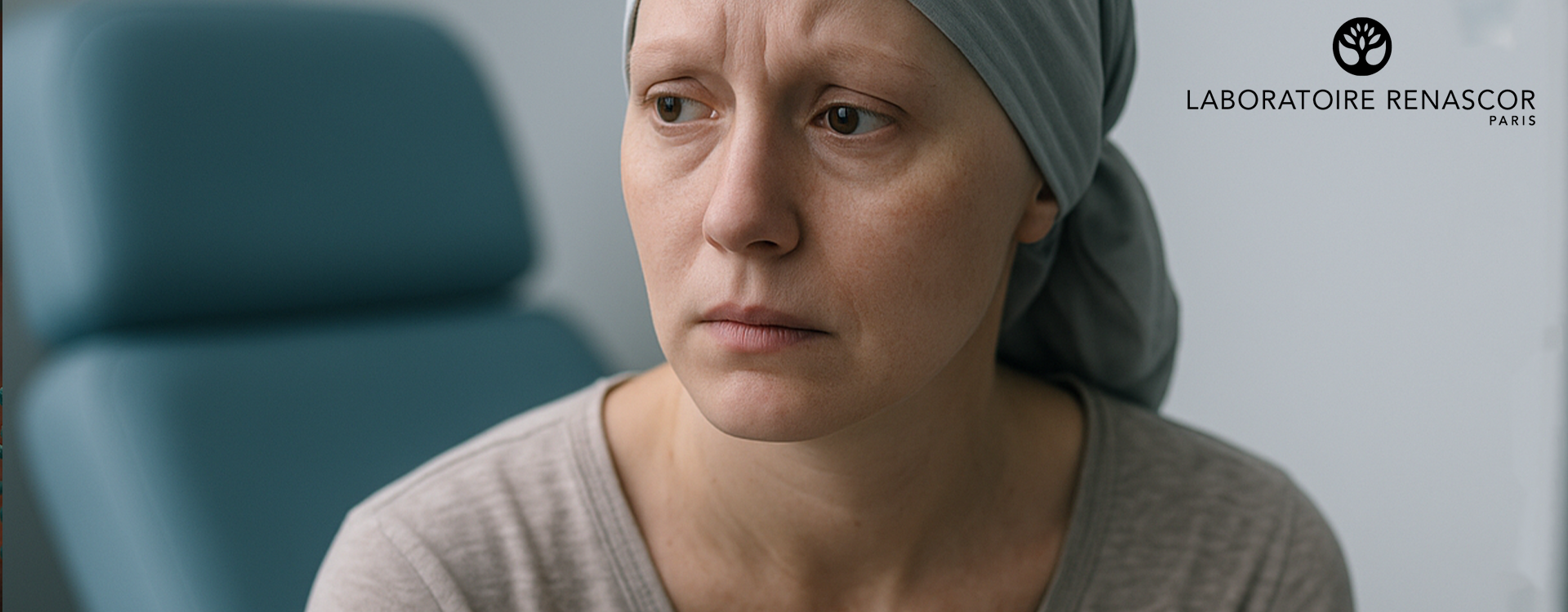
Just as we work on post-cancer hair restoration, these innovations demonstrate that it is possible to restore patients' confidence, both in their bodies and in the medicine of tomorrow.<\/p>
<\/p>
An innovative European project<\/h3>
How does it work?<\/h3>
Technical challenges<\/h3>
A step towards the future of diagnosis<\/h3>
The RENASCOR vision<\/h3>