

Hair regrowth after chemotherapy: what’s normal and what isn’t
Why post-cancer hair reconstruction cannot be approached like typical hair loss
Hair regrowth after chemotherapy is often presented as a natural, automatic phenomenon that will eventually happen with time.
In reality, this view is simplistic and often leads to misunderstandings, disappointed expectations, and ill-suited reconstruction journeys.
The truth is more nuanced:
a scalp that has undergone chemotherapy can no longer be compared to a healthy scalp.
It is a tissue that has been deeply damaged by anticancer treatments and that, in many cases, must be reconstructed before it can produce stable, long-lasting regrowth.
Understanding what chemotherapy really changes
The hair loss linked to chemotherapy is only the visible part of the process.
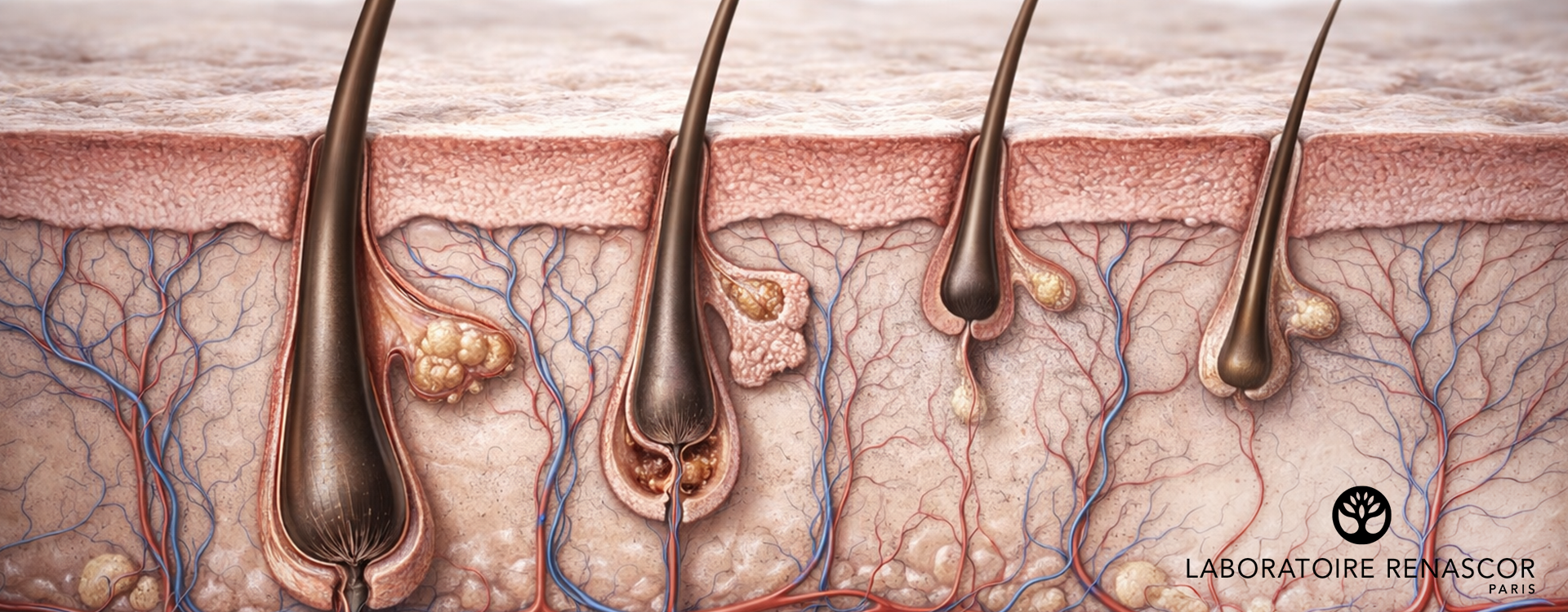
Anticancer treatments act on rapidly dividing cells, among which are the cells of the hair follicle.
This action leads to:
-
a sudden halt in the hair growth cycle
-
a disruption of follicular function
-
altered local microcirculation
-
inflammation of the scalp, sometimes silent
-
a depletion of the biological environment needed for regrowth
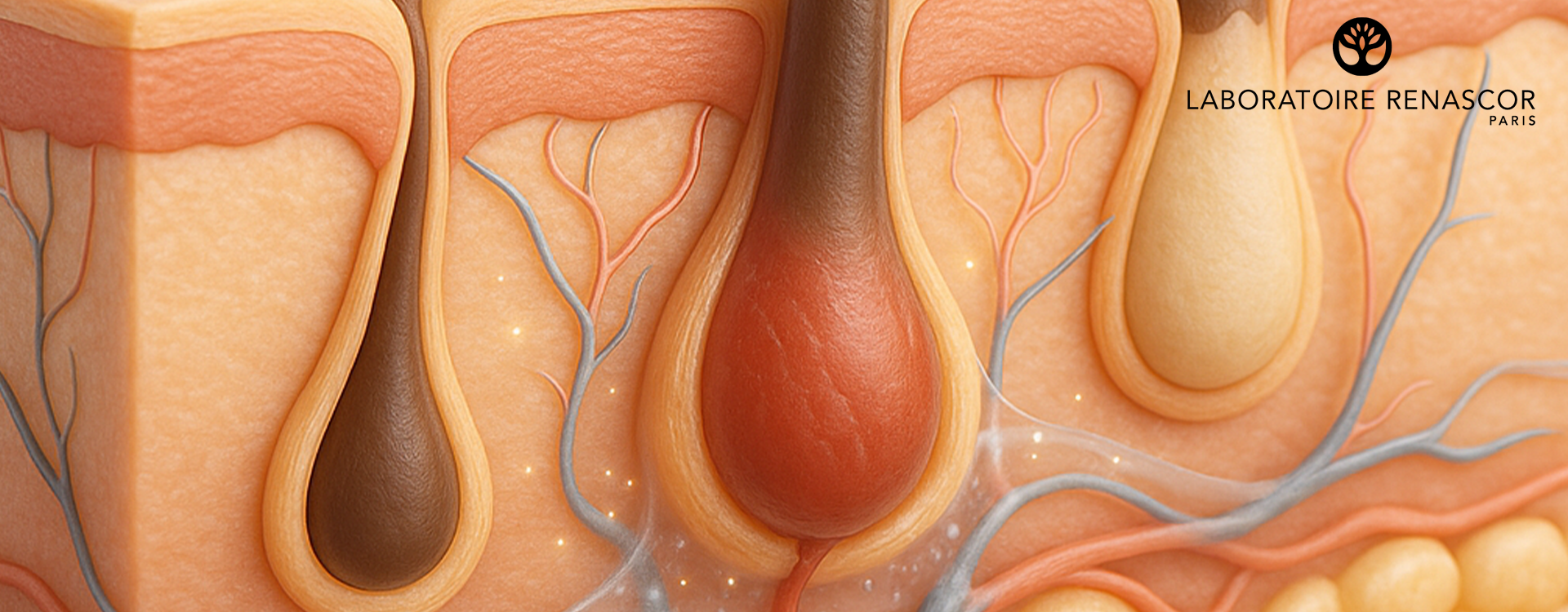
In many cases, the hair follicle is not destroyed.
It is disorganized, weakened, and unable, in the short term, to produce quality hair.
The real issue is therefore not only hair regrowth, but the ability of the scalp to once again become a favorable environment for that regrowth.
Why post-chemotherapy regrowth is different from other types of hair loss
It is essential to distinguish regrowth after chemotherapy from other hair loss situations.
Hormonal, seasonal, or stress-related hair loss usually occurs on a functional scalp.
After chemotherapy, the scalp is biologically weakened.
This difference explains why:
-
regrowth may be slow
-
hair may grow back finer or with a different texture
-
density may remain unstable
-
some regrowth phases run out of steam after a few months
Traditional hair solutions, designed for healthy scalps, are often unsuited to this specific context.
What is normal after chemotherapy
Regrowth that doesn’t start immediately
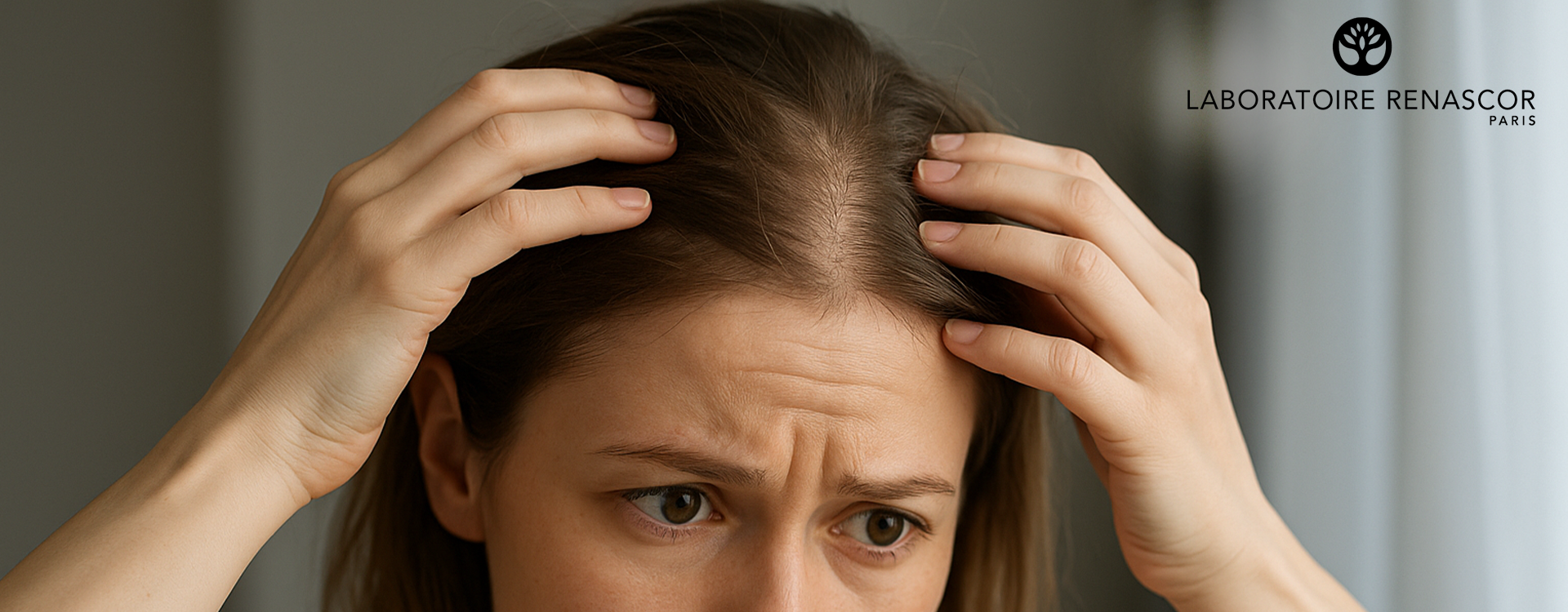
After the last treatment cycle, it is common for regrowth not to be visible right away.
A delay of several weeks, sometimes even several months, is common.
This period corresponds to a phase of biological recovery during which the hair follicle gradually emerges from its state of forced shutdown.
The absence of hair in the first few weeks is not a sign of failure.
Different hair during the first regrowth phases
The first post-chemotherapy hair is often:
-
finer
-
more fragile
-
more brittle
-
sometimes of a different texture or color
This so-called “immature” regrowth is common.
It reflects the restarting of the follicle in an environment that is still unstable.
This phenomenon is normal, but it requires appropriate support to prevent this fragility from becoming long-lasting.
Uneven density across the scalp
It is common for some areas to grow back faster than others.
The top of the head and the temples are often slower to regain density.
Chemotherapy desynchronizes the follicles, and each area gradually recovers its own functional rhythm.
What is not normal after chemotherapy
A prolonged absence of regrowth
When no significant regrowth is observed several months after the end of treatment, this is no longer just a simple physiological delay.
This may indicate:
-
persistent inflammation of the scalp
-
lasting damage to the skin tissue
-
a follicular environment that has not been rebuilt
In this case, passively waiting is rarely the right solution.
Regrowth that starts and then fades
Some people notice encouraging initial regrowth, followed by a slowdown, thinning, or new hair loss.
This scenario is typical of stimulation applied to a scalp that has not been prepared.
Without solid biological foundations, regrowth cannot be maintained.
A persistently uncomfortable scalp
Persistent sensations of burning, tightness, pain, or hypersensitivity should never be trivialized.
An inflamed scalp cannot produce stable, long-lasting hair, regardless of the method used.
Why conventional solutions are often insufficient after cancer
Most regrowth solutions available on the market are designed to rapidly stimulate the follicle.
They assume that the scalp is healthy.
After chemotherapy, this assumption is false.
Stimulating a weakened scalp may:
-
maintain inflammation
-
slow down reconstruction
-
produce unstable or short-lived results
This is one of the main reasons why many treatments fail in the post-cancer context.
Rebuild before stimulating: a fundamental principle
After chemotherapy, the scalp must be regarded as tissue that needs to be rebuilt.
Before any attempt to increase density or stimulate growth, it is essential to:
-
soothe the scalp
-
restore its biological balance
-
recreate a favorable environment for the follicle
-
respect the natural recovery rhythm
Regrowth is never a starting point.
It is the direct consequence of successful reconstruction.
The approach of Laboratoire RENASCOR
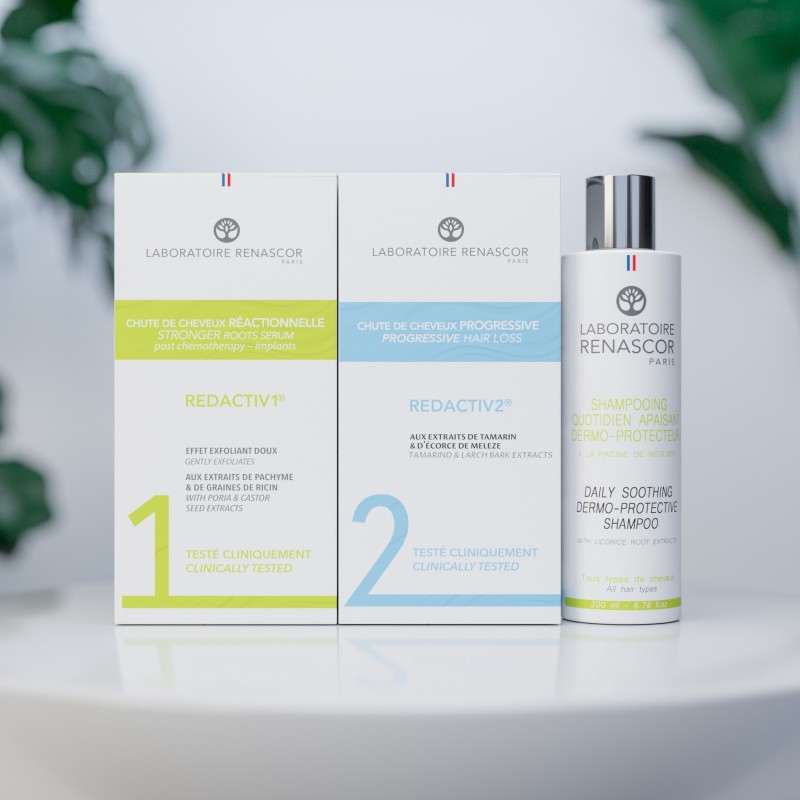
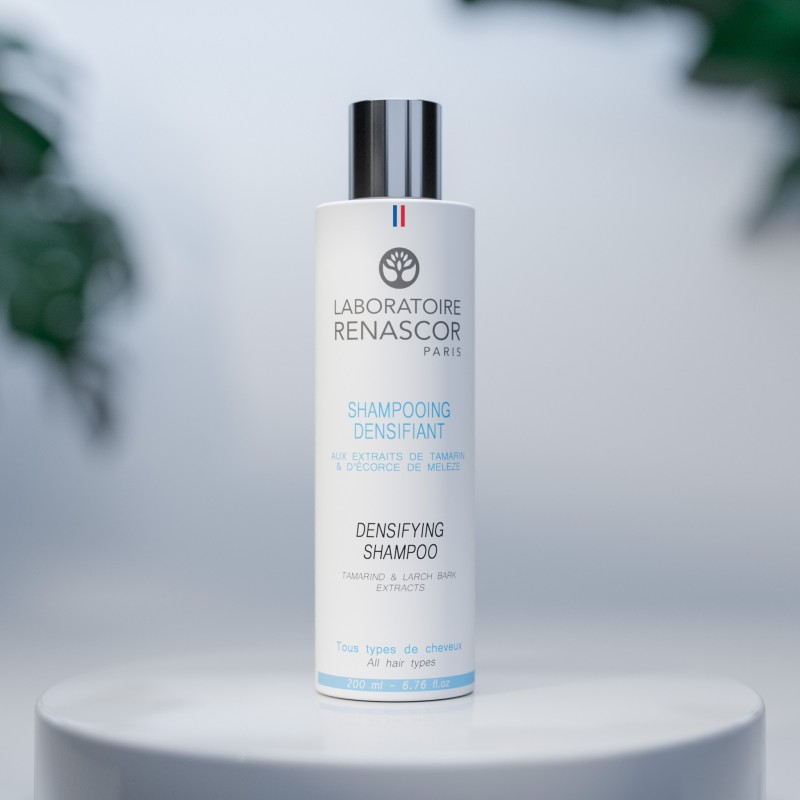
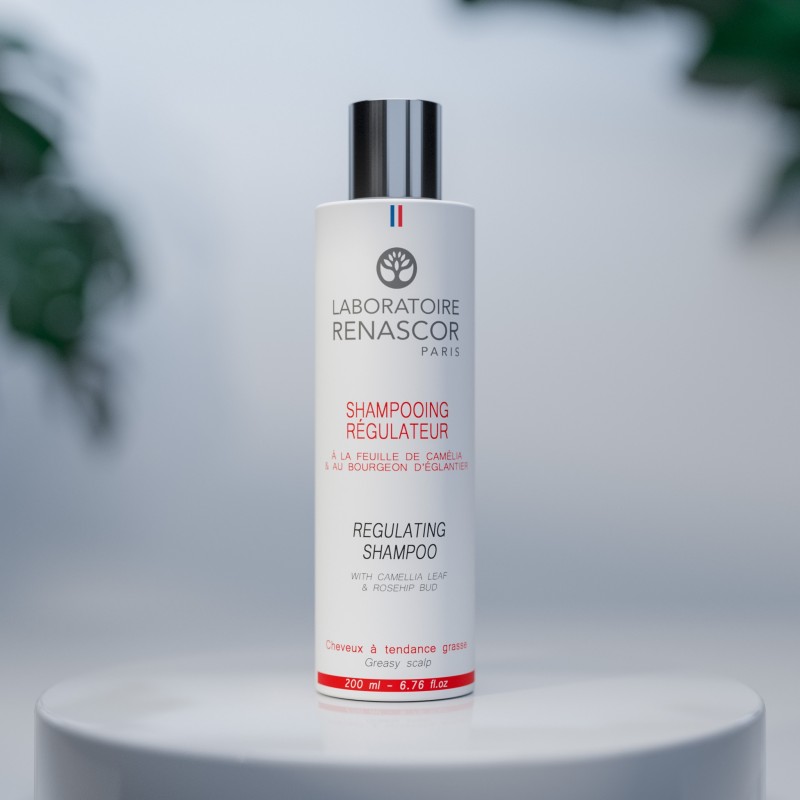
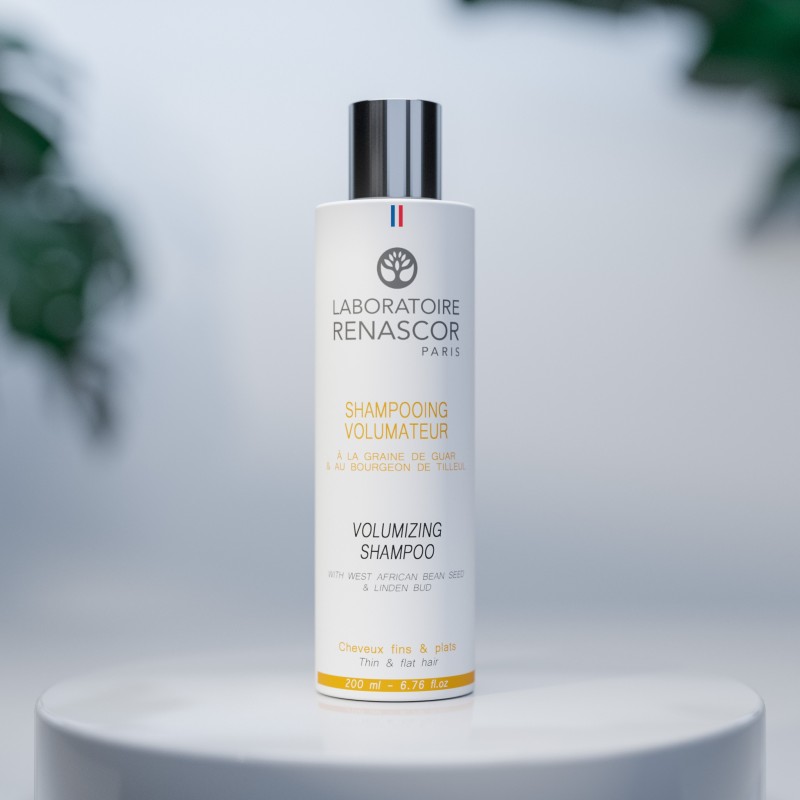
Laboratoire RENASCOR specializes exclusively in hair reconstruction during and after anticancer treatments.
This specialization is based on a simple conviction:
post-chemotherapy regrowth requires specific protocols, distinct from any other hair treatment.
The care products developed by Laboratoire RENASCOR are designed to:
-
support weakened scalps
-
act on altered biological mechanisms
-
rebuild the follicular environment
-
prepare for progressive, stable, and long-lasting regrowth
RENASCOR does not try to force regrowth.
RENASCOR creates the biological conditions necessary for its appearance and its long-term maintenance.
In summary
Hair regrowth after chemotherapy does not follow the same rules as normal regrowth.
The scalp is the central factor.
Stimulating without rebuilding often leads to failure.
Reconstruction is an essential step.
It is precisely this step that Laboratoire RENASCOR has chosen to support.
Conclusion
Post-cancer hair regrowth is not a secondary or purely aesthetic issue.
It is an integral part of the reconstruction process.
Understanding what is normal and what is not, and relying on a truly appropriate approach, makes it possible to go through this stage with more peace of mind, coherence, and long-lasting results.