

Hormonal hair loss: causes, signs and effective solutions
Hormonal hair loss is one of the most common causes of diffuse hair shedding, affecting both women and men. It results from a imbalance of the hormonal system that disrupts the hair growth cycle. Understanding its mechanisms is essential to choose an appropriate treatment and prevent the condition from worsening.
What is hormonal hair loss?
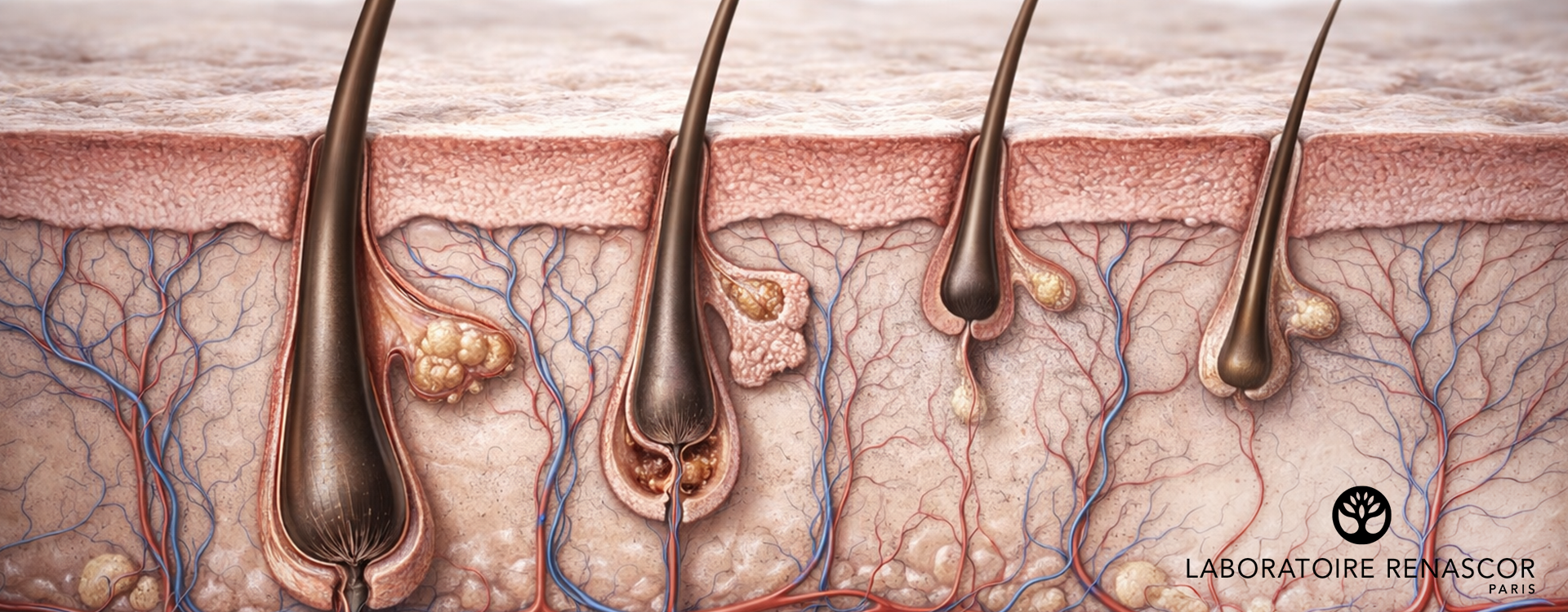
Hormones play a decisive role in scalp health. They regulate the anagen phase, that is the period of active hair growth.
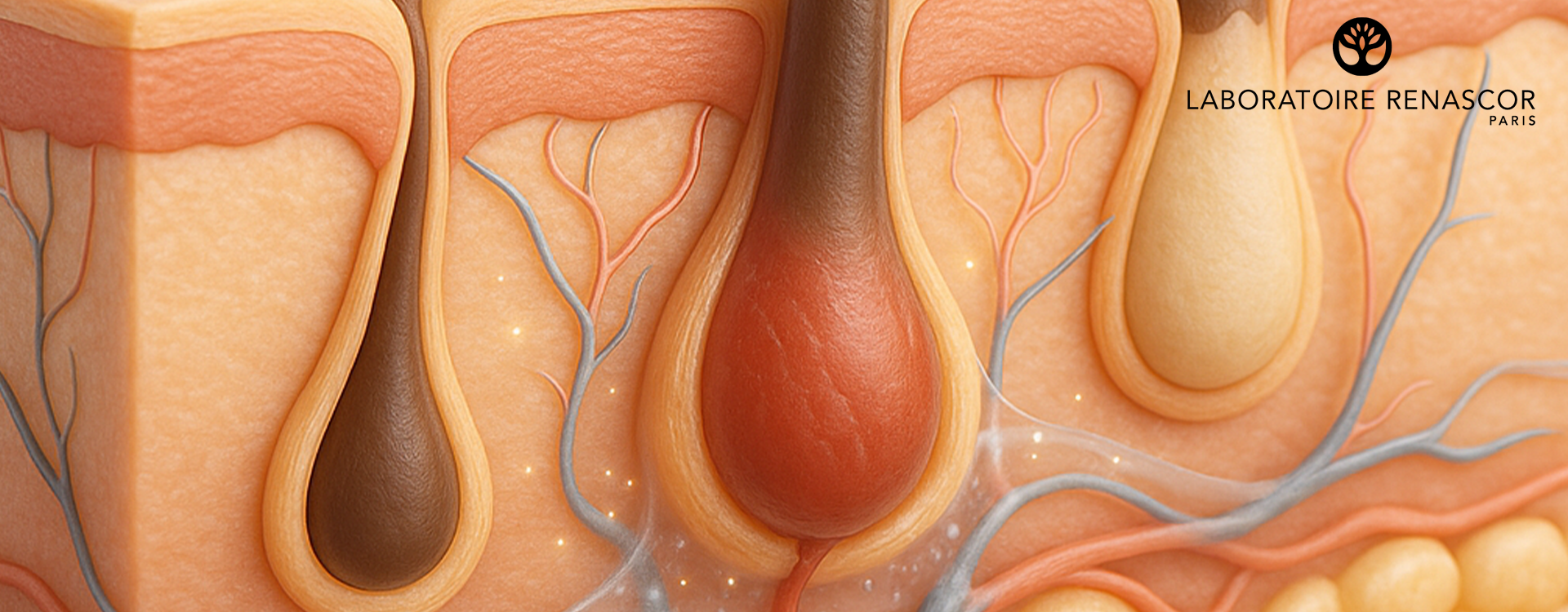
When this balance is broken, follicles become less active, hairs thin and regrowth slows.
The main causes observed are:
-
Pregnancy, postpartum and menopause : fluctuations of estrogen and progesterone alter the scalp microcirculation and weaken the bulbs.
-
Polycystic ovary syndrome (PCOS) : excess androgens stimulate the production of DHT (dihydrotestosterone), a hormone directly involved in the miniaturization of follicles.
-
Thyroid disorders : hypo- or hyperthyroidism can disrupt cell renewal and cause a loss of density.
-
Genetic predisposition : some people have an increased sensitivity to DHT, leading to androgenetic alopecia.
How to recognize hormonal hair loss?
Hormonal hair loss often develops progressively.
Here are the most characteristic signs:
-
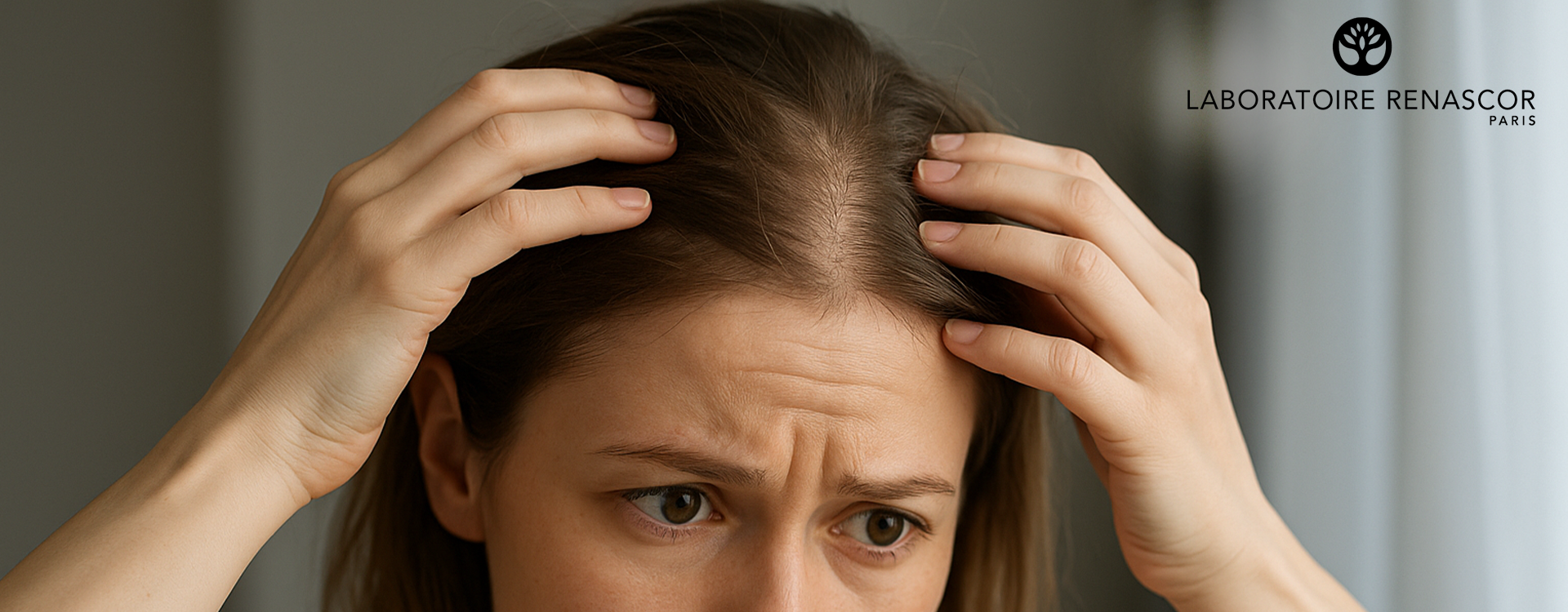
Gradual thinning on the crown of the head or the temples.
-
Visible loss of density, hair appears more sparse and less voluminous.
-
Increased shedding during brushing or washing.
-
Cyclical shedding periods, often linked to a hormonal event (pregnancy, stopping the pill, menopause, medical treatment…).
In women, the frontal hairline generally remains intact, unlike male pattern baldness, where the receding hairline is more pronounced.
What to do in case of hormonal hair loss?
The earlier the diagnosis is made, the more effectively regrowth can be stimulated.
Here are the recommended steps:
-
See a professional (doctor, dermatologist, trichologist) to identify the hormonal cause.
-
Perform a complete blood panel, including sex hormones, thyroid hormones, ferritin and vitamin D.
-
Implement a targeted hair care protocol, which acts both on the scalp and on the overall hormonal balance.
-
Adopt a balanced lifestyle : a diet rich in protein, zinc, biotin, vitamin B6 and sulfur-containing amino acids.
-
Avoid damaging hair practices (straightening, repeated coloring, overly tight hairstyles) that further weaken the hair fiber.
The RENASCOR Laboratory approach
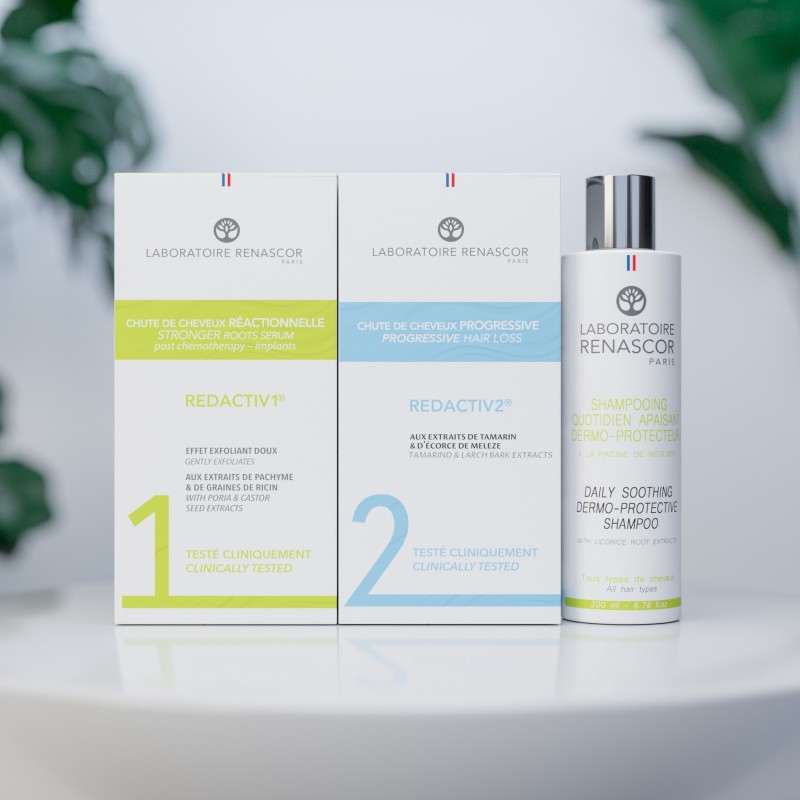
The RENASCOR Laboratory has developed a unique approach based on cellular biostimulation and the reactivation of the anagen cycle.
The treatments REDACTIV1 and REDACTIV2 are integrated into a comprehensive hair reconstruction protocol designed to restore communication between the hair follicle and its hormonal environment.
These treatments act simultaneously on three essential axes :
-
Awakening of dormant bulbs and stimulation of microcirculation.
-
Reduction of inflammatory and fibrosing processes that block regrowth.
-
Protection of dermal collagen for a firmer anchoring of the hair.
Result: a denser, more resilient and longer-lasting regrowth, respectful of the scalp and the hormonal balance.