


Is there a link between mobile phones and cancer?
Mobile phones have revolutionized our daily lives. We use them for work, communication, entertainment, and they rarely leave our hands. But this proximity raises a persistent concern: can mobile phones cause cancer?
This question has been asked for more than twenty years. Between fears, rumors and scientific research, it can sometimes be difficult to know what to believe.
In this article, we take stock of electromagnetic waves, the studies carried out by WHO and IARC, and the precautionary measures recommended.
Mobile phone waves: how do they work?
Mobile phones operate using radiofrequency electromagnetic waves. Unlike ionizing radiation (X-rays, gamma radiation, UV rays), which can alter DNA and directly induce cancers, non-ionizing waves do not have this destructive power on cells.
This means the potential impact of mobile phones on health cannot be directly compared to X-rays or UV. But the question remains open: can prolonged, daily exposure nevertheless lead to long-term biological effects?
Mobile phones and cancer: what do the studies say?
There is a large body of scientific research:
-
In 2011, the International Agency for Research on Cancer (IARC), part of the WHO, classified the radiofrequencies emitted by phones as "possibly carcinogenic to humans" (Group 2B).
-
Some studies suggest a slightly increased risk of brain cancer (glioma, acoustic neuroma) among very heavy users, but these results remain controversial.
-
Other large international studies (INTERPHONE, COSMOS, Million Women Study) have not found sufficient evidence to establish a direct causal link.
Current scientific conclusion: no formal and confirmed link between mobile phones and cancer has been demonstrated, but uncertainties remain, notably for heavy use over several decades and in children/adolescents.
Areas of uncertainty and debate
-
Duration of exposure: phones have only been used for about 25 years, which is still short for measuring effects on cancers that can appear after 30 or 40 years.
-
Sensitivity of children: their developing brains are more vulnerable, and their thinner skull allows more waves to penetrate.
-
Indirect effects: waves could act on cellular metabolism, oxidative stress, or the permeability of the blood-brain barrier, but evidence remains weak.
Mobile phones and the precautionary principle
Even without definitive proof, several health organizations recommend limiting exposure as a precautionary measure. Here are some simple actions:
-
Use a hands-free kit or a Bluetooth headset.
-
Prefer sending text messages rather than long calls.
-
Do not make calls in areas with poor reception (where the phone emits more strongly).
-
Keep the phone away from the body at night (avoid under the pillow).
-
Limit use among children and adolescents.
These actions are simple, effective and help reduce unnecessary exposure.
The role of RENASCOR Laboratory
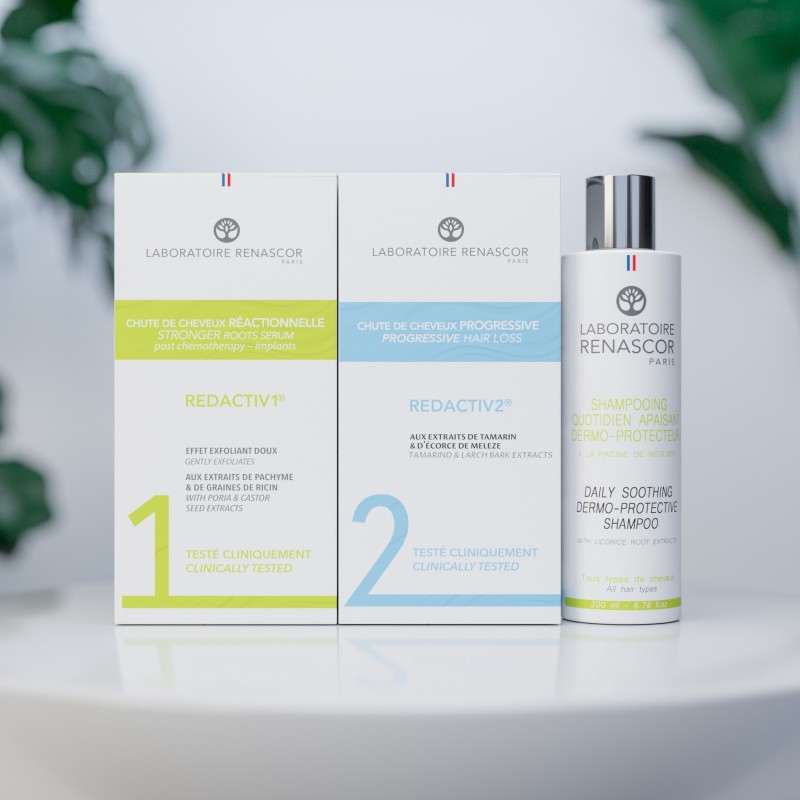
At the RENASCOR Laboratory, we are committed to post-cancer hair reconstruction and raising awareness about health. We know how much patients seek reliable answers to cancer-related questions.
While mobile phones are not currently identified as a certain cause, they remind us that many environmental and behavioral factors (tobacco, alcohol, diet, pollution, lifestyle) play an important role in prevention.
RENASCOR's mission is to support recovery after cancer, but also to contribute to better public information to avoid false beliefs and false reassurances.
FAQ: Mobile phones and cancer
1. Do mobile phones cause brain cancer?
To date, no formal scientific evidence demonstrates a direct link. Some studies mention a potential risk for heavy users, but results remain uncertain.
2. Are children more exposed to waves?
Yes. Their brain is developing and their thinner skull allows more waves to penetrate. Authorities recommend limiting their use.
3. Are Bluetooth headsets safer?
Yes. They also emit waves, but their power is much lower than that of a phone pressed to the ear.
4. How can I reduce my exposure to waves?
Use a hands-free kit, favor text messages, avoid making calls in areas of poor reception and do not sleep with your phone in close proximity.
In summary
- Mobile phones emit non-ionizing waves that do not directly damage DNA.
- Current studies have not demonstrated a certain link with cancer, but caution remains advisable, especially for children and heavy users.
- The precautionary principle is simple to apply: limit unnecessary exposure, diversify your usage, and stay informed about scientific developments.
Cancer remains a multifactorial disease, and while the mobile phone is not currently among confirmed causes, it symbolizes the necessary vigilance regarding new technologies.