

Why does hair color change after chemotherapy?
The change in hair color after chemotherapy is a well-known phenomenon, yet still largely unfamiliar to the general public.
Patients often observe regrowth that is
More rarely — but scientifically documented — some patients experience darker hair or a partial repigmentation after having previously had white hair.
These variations are never random: they reflect deep changes in melanocyte function within the hair follicle.
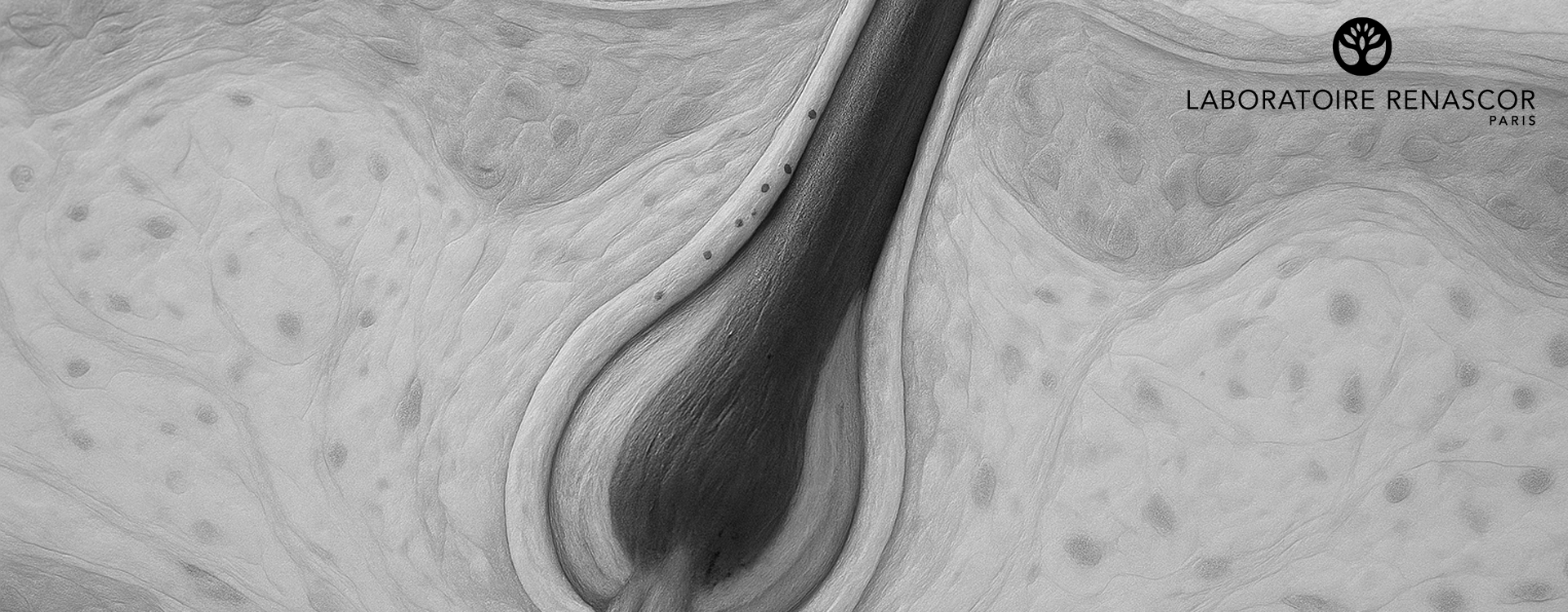
1. The role of melanocytes in hair pigmentation
Hair color is determined by:
-
the density of melanocytes (pigment cells),
-
their ability to produce melanin,
-
the distribution of that melanin within the fiber,
-
the state of keratinization which affects light diffusion.
Melanocytes, extremely sensitive to chemical stress and cytotoxic agents, are directly affected by oncological treatments.
2. Why does pigmentation decrease after chemotherapy?
Several mechanisms contribute to lighter or grayer regrowth:
a) Temporary inhibition of melanogenesis
Chemotherapy disrupts melanin production by blocking:
-
tyrosinase (a key enzyme),
-
the maturation of melanosomes,
-
pigment transport to the fiber.
The melanin produced is then insufficient, hence the lighter appearance.
b) Transient reduction in the number of functional melanocytes
Cytotoxic stress leads to:
-
cell death of some melanocytes,
-
an interruption of their cycle,
-
a difficulty in regenerating.
The first hairs are then hypopigmented, sometimes almost white.
c) Follicular inflammation
As with texture, inflammation disrupts the follicle micro-environment, altering:
-
enzymatic activity,
-
melanocyte survival,
-
the quality of keratinization (and thus the visual appearance).
3. Why do some hairs regrow darker?
This phenomenon is less common, but well documented.
It can be explained by:
a) A temporary reprogramming of melanocytes
In some cases, post-traumatic regrowth leads to a compensatory hyperactivity:
-
tyrosinase becomes more active,
-
pigment density increases,
-
melanosomes are transferred more efficiently.
The hair then appears darker than before.
b) A change in follicle structure
A slightly thicker or denser fiber differs:
-
in how it absorbs light,
-
in the diffusion of melanin in the cortex.
The hair looks visually darker, even if melanin has not increased.
4. Repigmentation of white hair: a rare but real phenomenon
Regrowth of colored hair after having had white hair is extremely rare in the general population, but it has been observed:
-
after oncological treatments,
-
after major follicular stress,
-
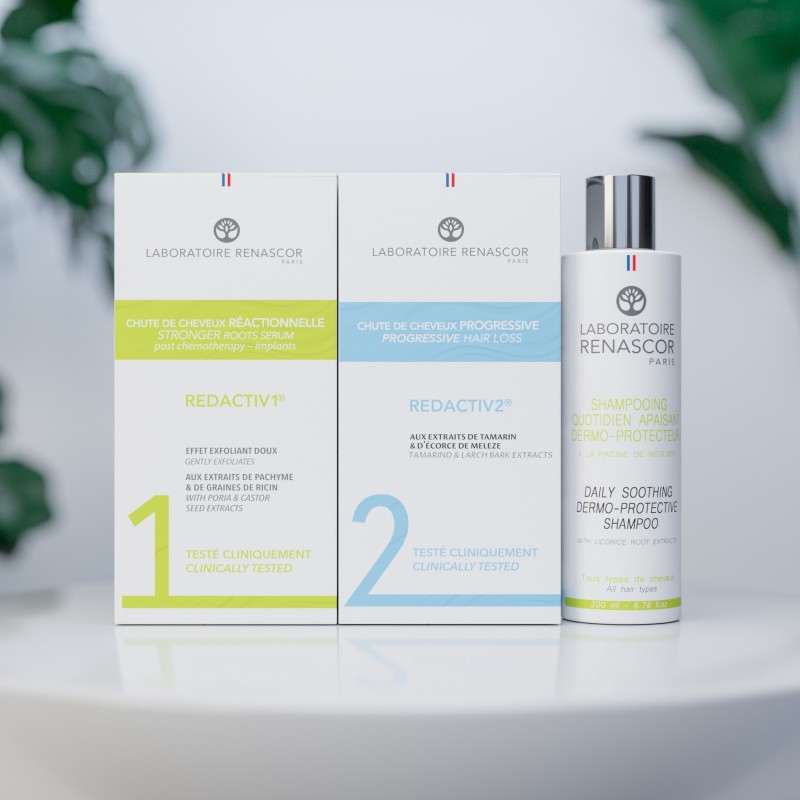
and more frequently in patients following an intensive hair reconstruction protocol, such as REDACTIV.
Why?
Age-related hair whitening results from the gradual depletion of the melanocyte reservoir.
But during deep follicular reconstruction:
-
microcirculation is improved,
-
melanocyte stem cells can be stimulated,
-
some "dormant" pigment cell populations can be reactivated.
This repigmentation mechanism is rare but scientifically plausible.
Clinical observations show that the REDACTIV protocol, by reducing inflammation and restoring the follicular cycle, creates an environment favorable to this type of pigment reactivation.
This is not about "coloring" the hair, but about rehabilitating pigment biology when it was not completely shut down.
5. Influence of the RENASCOR protocol on pigmentation
The post-chemo protocol of the RENASCOR Laboratory acts on:
-
follicular inflammation,
-
normalization of the anagen cycle,
-
microcirculation,
-
keratinization,
-
the metabolism of follicular stem cells.
This improvement of the biological environment can allow:
-
a quicker stabilization of color,
-
less dull regrowth,
-
homogenization of pigmentation,
-
partial repigmentation in some rare but real cases.
This is a positive side effect, not a promise: individual biology remains decisive.
Conclusion
Changes in hair color after chemotherapy reflect the deep disruptions affecting melanocytes and follicle keratinization.
Whether hairs regrow lighter, darker, or exceptionally recolored, these changes are biological markers of post-oncological reconstruction.
The RENASCOR protocol, by restoring the follicle's functional environment, helps stabilize, harmonize and sometimes even reactivate certain pigmentary functions.
The color that reappears is never accidental:
it is the visible expression of a follicle that is repairing itself.