

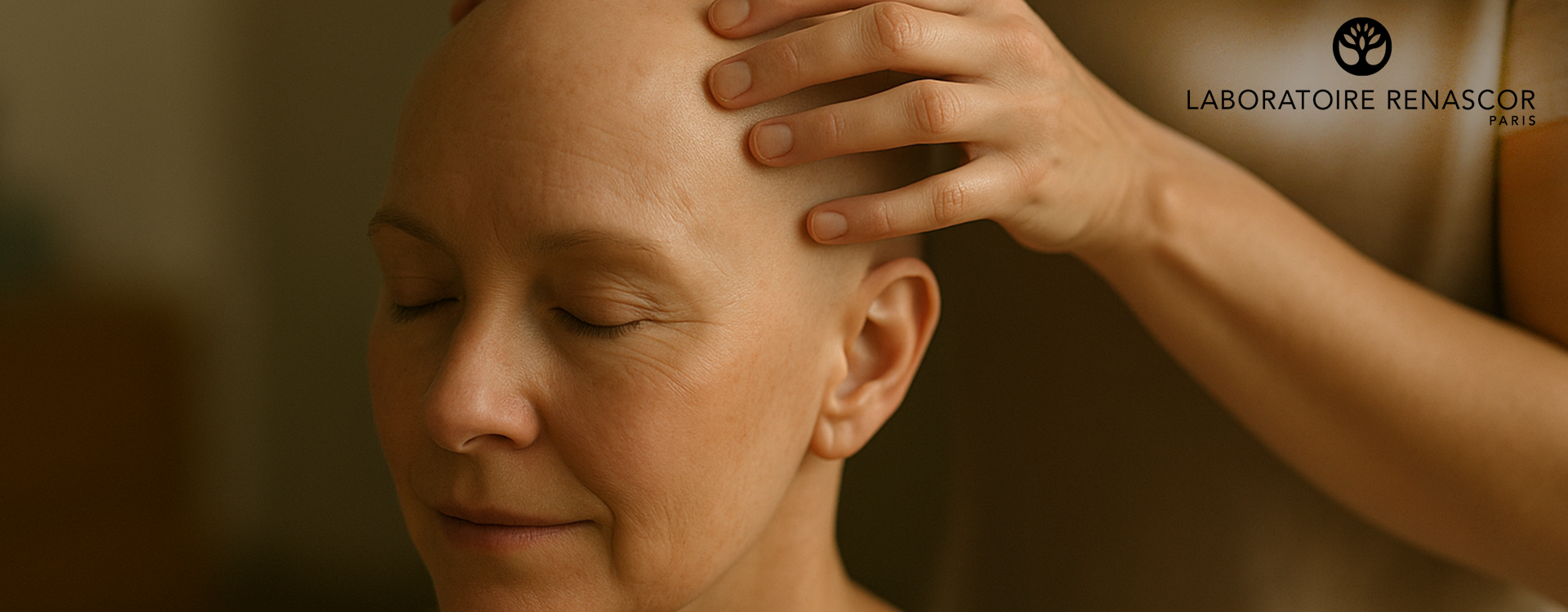
The importance of touch in post-cancer reconstruction
When the hand becomes the first care
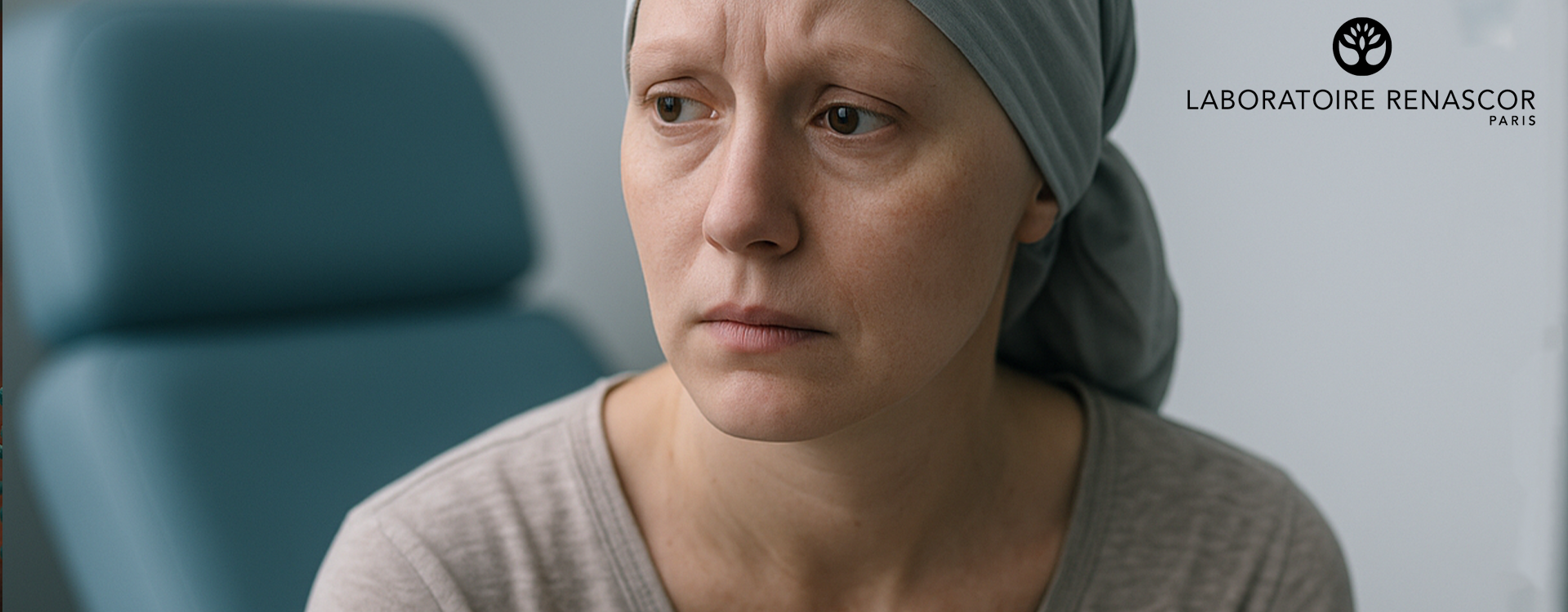
When anticancer treatments end, another phase of the therapeutic journey begins: that of physical and psychological reconstruction.
The body begins its regeneration, but the memory of the disease remains written in the skin, the scalp and the perception of self.
In this context, touch becomes a therapeutic tool in its own right.
It makes it possible to restore sensory communication between the body and the mind, essential to reclaiming one’s image and restoring bodily confidence.
The socio-hairdressers play a decisive role in this stage: they combine mastered technical gestures with a human approach, thus extending the effects of medicine through holistic care.
1. Touch: a physiological and psychological tool of care
Touch is the first mode of sensory communication of the human being.
In oncology, it becomes again an essential vector of balance and regulation.
The post-oncological scalp massage, when performed by a trained professional, generates several measurable effects:
-
Stimulation of skin microcirculation, promoting the supply of oxygen and nutrients to the hair bulbs;
-
Reduction of muscular and nervous tensions of the scalp, often related to stress and fatigue;
-
Release of neurotransmitters such as endorphins and serotonin, contributing to a feeling of relaxation and well-being;
-
Reclaiming of the body, through reactivation of sensory perceptions altered by treatments.
These combined effects act on the biological, neurological and emotional levels, making touch a natural and effective complement to supportive care.
2. The specific role of the socio-hairdresser
The socio-hairdresser operates in continuity with medical care.
Their mission is to adapt hair care and massage techniques to the specific needs of patients in the post-therapeutic phase.
Their training enables them to recognize the side effects of treatments (hair loss, skin dryness, hypersensitivity, vascular alteration) and to adjust each gesture accordingly.
The intervention always begins with a scalp assessment: appearance, temperature, elasticity, hydration.
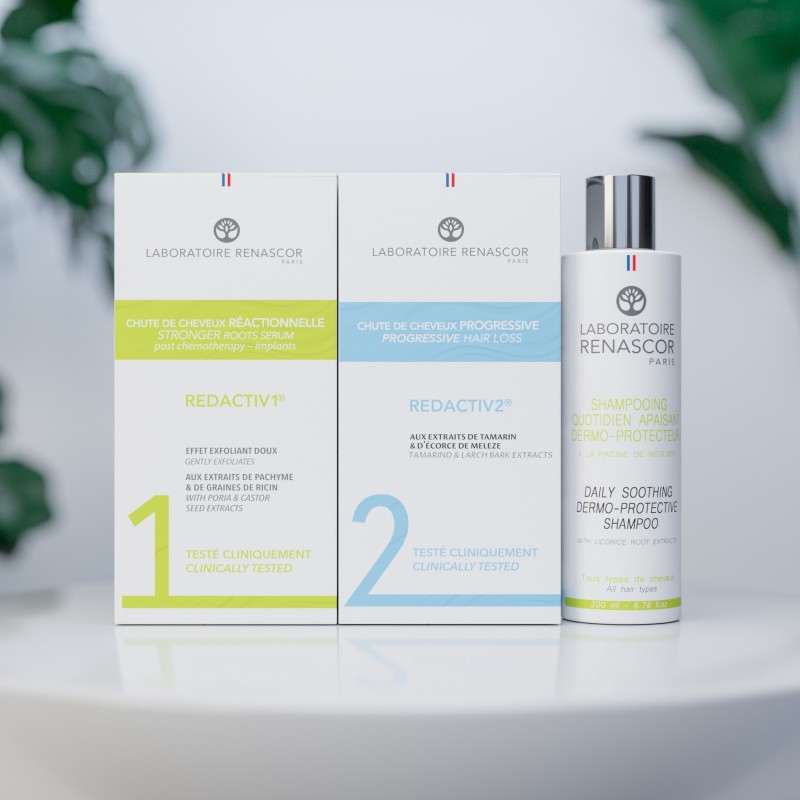
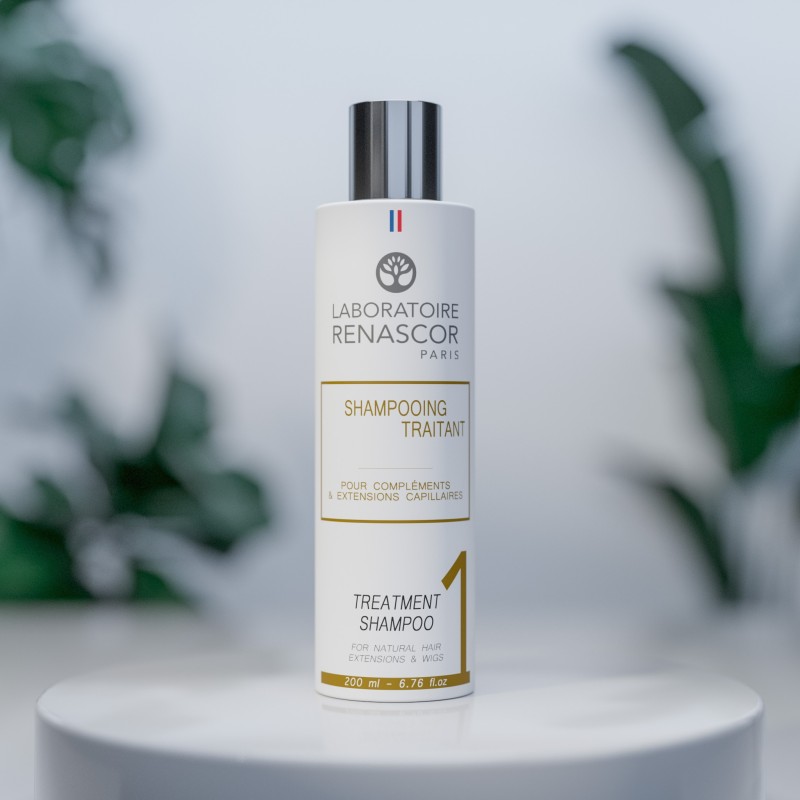
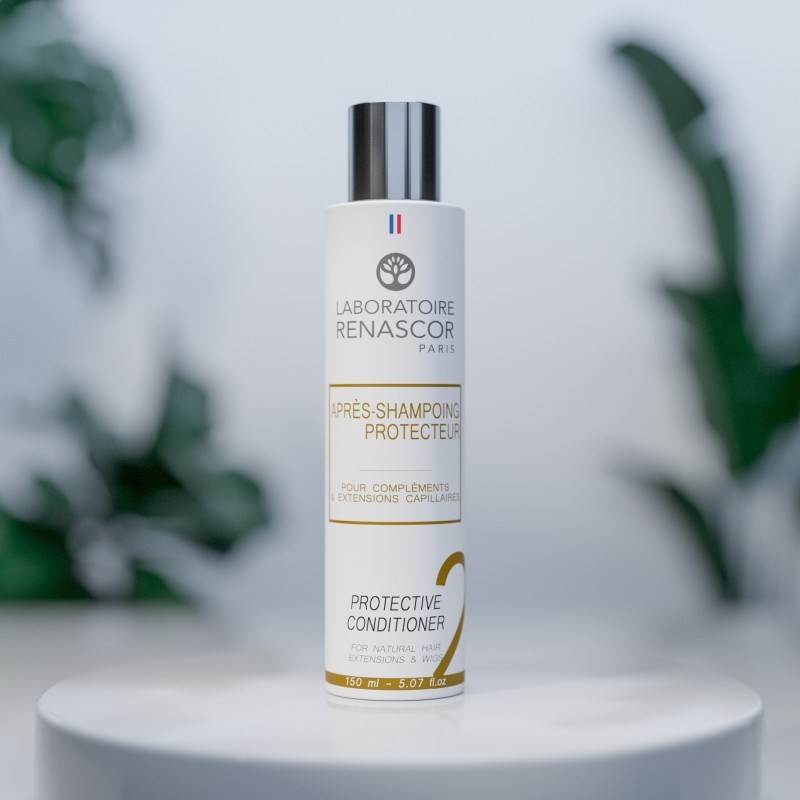
This diagnosis guides the massage sequence and the choice of treatments applied, notably the REDACTIV1 and REDACTIV2 formulations from Laboratoire RENASCOR.
This is not an aesthetic treatment, but an act of sensory rehabilitation, aimed at restoring the physiological functions of the scalp and supporting the reconstruction of body image.
Many patients describe this moment as the first non-medical contact since the end of treatments.
3. The RENASCOR protocol: science applied to the gesture
The REDACTIV1 / REDACTIV2 protocol from Laboratoire RENASCOR was designed to be applied within an integrative care framework, combining scientific rigor and a human approach.
Studies conducted post-chemotherapy have highlighted a direct link between the application gestures and the biological effectiveness of the active ingredients.
When they are applied with gentle, regular circular movements :
-
the microcirculation of the papillary dermis increases by nearly 40%,
-
the trans-epidermal diffusion of active ingredients is optimized,
-
the bulb stem cells benefit from a better supply of oxygen and nutrients,
-
the parasympathetic system is activated, promoting relaxation and tissue regeneration.
Thus, the manual gesture is not limited to emotional support: it acts as a physiological amplifier of the treatment.
The hand becomes a relay between the scientific formulation and the biological response of the scalp.
4. The scalp: a memory area of the treatment
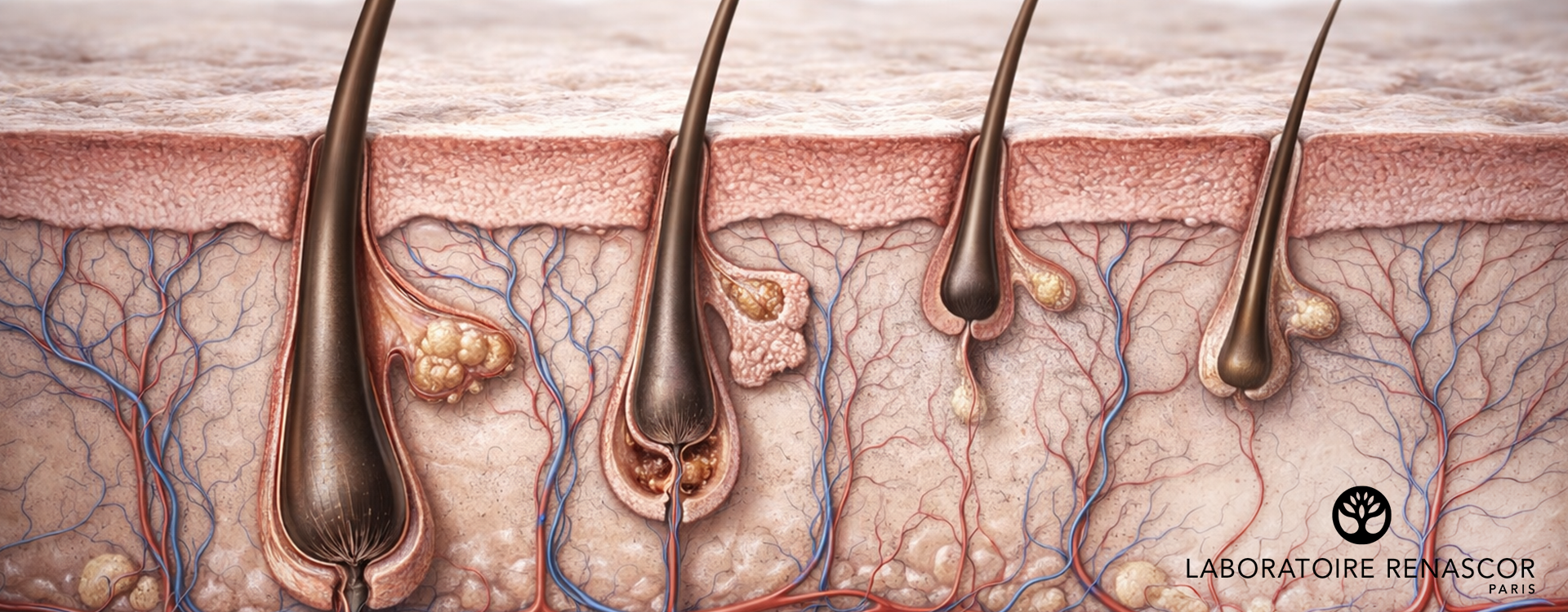
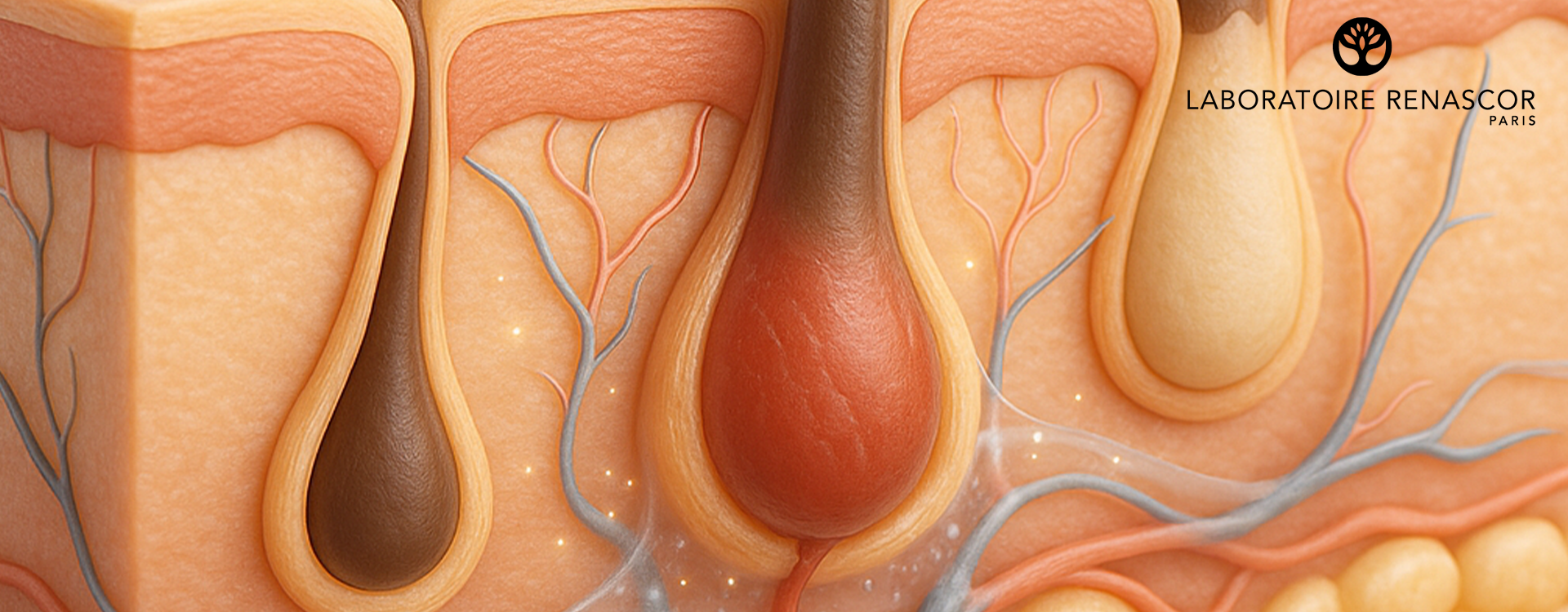
The scalp is an area particularly impacted by anticancer treatments.
Observed changes include:
-
a reduced vascularization,
-
a weakening of fibroblasts,
-
a prolonged nerve hypersensitivity.
Progressive and controlled touch helps to re-educate this area.
It restores sensory tolerance, improves dermal suppleness and restarts cellular exchanges.
This approach contributes to rehabilitating body perception, often altered by the disease and the side effects of treatments.
Trained socio-hairdressers know how to adjust their gestures according to the patient's reactions, ensuring care that is both safe, adapted and effective.
5. Care as a step in sensory rehabilitation
Patient feedback highlights notable physical and psychological benefits.
Post-oncological scalp massage promotes :
-
an improvement in skin comfort,
-
a reduction of psychological tension,
-
a restoration of the sense of bodily identity.
This care moment is often perceived as a transition between the medical period and the resumption of daily life.
It allows the reintroduction of the notion of positive contact with one’s body, an essential step in the overall healing process.
Laboratoire RENASCOR actively supports this integrative approach, convinced that the sensory environment in which it takes place also influences hair regrowth results.
In conclusion
Touch is not only a vector of well-being: it is a scientific tool for physiological and psychological rehabilitation.
It complements the medical approach by promoting the restoration of cellular exchanges, scalp regeneration and the reappropriation of the body.
As summarized by Stéphane PAULET, founder of Laboratoire RENASCOR :
"Where science makes hair grow back, touch restores the taste for life."