

Pillows and hair breakage: the little-known link you need to know
The health of your hair is not only influenced by your diet, your treatments, or your environment.
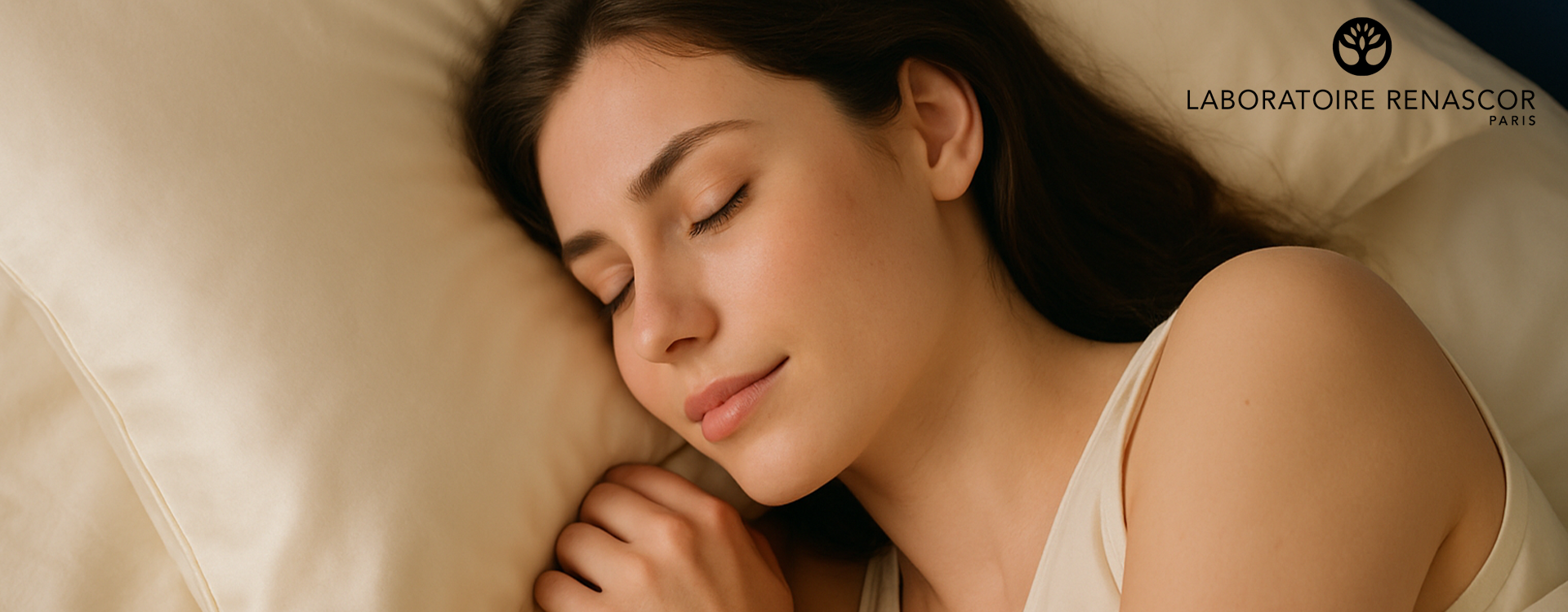
Each night, an invisible but decisive factor can weaken the hair fiber: your pillow.
At Laboratoire RENASCOR, the world leader in post-cancer hair reconstruction, we have studied the impact of nocturnal micro-aggressions on hair health.
Result: the material of your pillowcase can accelerate breakage, promote split ends and worsen density loss.
In this article, we will detail the physical mechanisms at play, the materials to favor or avoid, and how to integrate this factor into a complete hair protocol.
Nighttime friction: a silent enemy
Each movement during sleep causes a friction between your hair and the fabric.
On a classic cotton pillow:
-
The fibers catch on the cuticle (the hair's outer protective layer).
-
This repeated abrasion lifts the scales, making the hair porous and vulnerable.
-
Over time, this causes split ends, breakage and loss of shine.
In people whose hair is already weakened (post-chemotherapy, post-transplant, bleached or very fine hair), the impact is multiplied: the fiber being thinner and less elastic, it gives way more easily.
RENASCOR observation: we regularly observe, during hair diagnostics, localized breakage areas corresponding to the patient's preferred sleeping position.
Static electricity: an aggravating factor
Synthetic materials (polyester, low-grade microfibers) can accumulate static electricity :
-
Hair becomes charged and difficult to style.
-
Electrical charges promote the opening of the cuticles, increasing dehydration and therefore fragility.
Why silk and satin make all the difference
Natural silk and silk satin offer an ultra-smooth surface:
-
Reduced friction → fewer micro-cracks on the fiber.
-
Preservation of the hair's and scalp's natural hydration.
-
Preservation of the hairstyle (less frizz and rebellious strands in the morning).
Warning: not all satins are equal. A synthetic satin may reduce friction, but will not have the same thermoregulatory properties nor the same softness as silk satin.
Expert recommendations from Laboratoire RENASCOR
-
Choose a natural silk pillowcase (minimum 19 momme) to limit friction and preserve the fiber.
-
Adopt a nighttime care protocol :
-
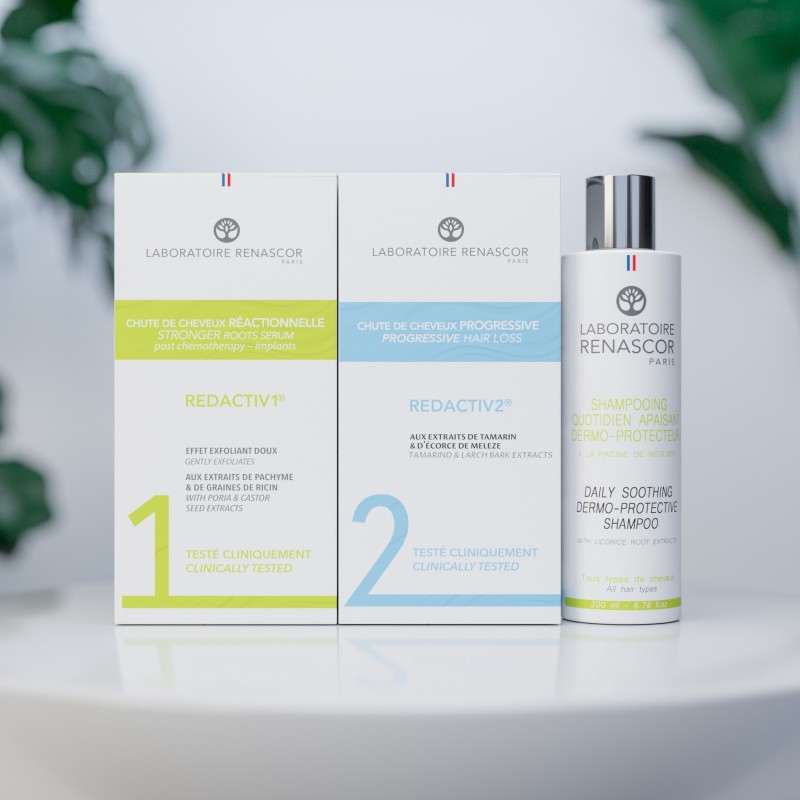
For post-chemo or fragile hair: REDACTIV1, which stimulates hair reconstruction and strengthens the root.
-
For hair in a densification phase: REDACTIV2, which increases vitality and resistance to breakage.
-
-
Sleep with protected hair :
-
For long hair: a loose braid or loose bun before sleeping.
-
Option: a silk scarf for maximum protection.
-
-
Regularly moisturize the fiber with a lightweight leave-in treatment before bed (specially formulated not to grease the pillow).
RENASCOR protocol: the winning combination
Changing the pillowcase reduces mechanical aggressions, but it is not enough if the fiber is already weakened.
That's why we combine:
-
External protection (silk, protective hairstyle)
-
Internal strengthening (bulb nutrition, stimulation of regrowth)
-
Targeted repair (closing the scales, smoothing the cuticle)
Our patients often notice:
-
Fewer broken hairs on the pillow upon waking
-
A softer, silkier feel in as little as 3 weeks
-
Better hold of the hairstyle day to day
Conclusion
Changing your pillowcase is not just a comfort gesture: it is a true act of hair prevention.
By combining this choice with a RENASCOR protocol, you protect your hair 24/7, even while you sleep.
Visit our consultation centers or contact a RENASCOR expert to create your personalized program.