


C2 : a promising new avenue in cancer treatment
Cancer research is constantly progressing, and new experimental treatments regularly emerge.
Among them, a protocol called C2 is attracting the interest of the scientific community. Behind this name are several innovative approaches, all focused on a common goal: targeting tumor cells more selectively and more effectively.
What is the C2 treatment?
The term “C2” does not refer to a single drug already on the market, but to research strategies around new combinations or anticancer molecules. Three main approaches stand out today :
-
The “C2” combination of four anticancer agents
Researchers have developed a cocktail of four compounds (tubacin, CI-994, erlotinib and dasatinib) capable of targeting a weakness of tumor cells: their supernumerary centrosomes.
-
In a healthy cell, centrosomes properly guide cell division.
-
In a cancer cell, their excess weakens division.
-
By blocking this mechanism, the C2 combination induces cancer cells to self-destruct, while sparing normal cells to a greater extent.
-
-
The C2 derivative of anthraquinone
Another approach explores a compound called anthraquinone C2, which acts in combination with certain chemotherapies such as oxaliplatin.
-
It improves the effectiveness of existing treatments, notably by reducing tumor cell resistance.
-
Its mode of action is based on modulation of the PI3K/AKT/mTOR pathway, which is heavily involved in cell survival.
-
-
C2 in immunotherapy
Finally, researchers are working on complement C2, a natural protein of the immune system. By boosting its activity, it could be possible to increase the potency of certain anticancer antibodies, and thus optimize the effectiveness of immunotherapies.
What is the status of the research?
At this stage, the C2 treatment is not yet in standardized clinical use. The available results mainly concern :
-
preclinical studies (in the laboratory or in animal models),
-
combination trials exploring new synergies with existing treatments,
-
a proof-of-concept approach aimed at better targeting cancer cells while reducing side effects.
It will still take time and large-scale clinical trials before it is known whether “C2” can become a validated therapeutic option for patients.
What this means for patients
This research is a source of hope because it illustrates two major trends in modern oncology :
-
Increased precision in attacking tumor cells, to limit collateral damage to healthy cells.
-
A combination approach, where new molecules come to reinforce the effectiveness of existing treatments rather than replace them.
Although “C2” is not yet a protocol available in clinical practice, it is a testament to the creativity and dynamism of cancer research.
RENASCOR support
At the RENASCOR Laboratory, we closely follow advances in oncology. Because while new treatments extend life and improve chances of cure, they often cause severe side effects for the hair.
Our mission is clear :
-
Support post-cancer hair regrowth,
-
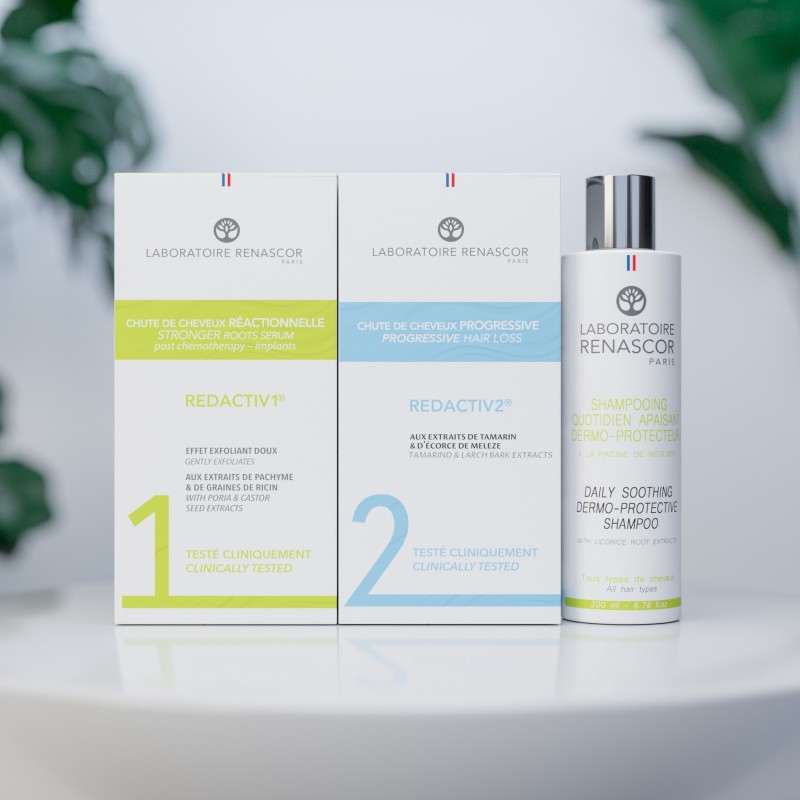
Provide concrete solutions through our REDACTIV1 and REDACTIV2 protocols,
-
Restore confidence to patients after the therapeutic ordeal.
Thus, even if “C2” represents an emerging innovation in the anticancer arsenal, RENASCOR remains the world leader in managing the hair consequences of these treatments and transforming fragility into renewal.
Conclusion
The “C2 treatment” is not yet an available therapy, but a promising scientific avenue. Whether it involves drug combinations, new molecules or immune strategies, they all aim to better target cancer cells and improve treatment effectiveness.
While research explores these new horizons, the RENASCOR Laboratory continues to support each patient in their reconstruction, placing hair health at the heart of post-cancer quality of life.