

Telogen effluvium vs androgenetic alopecia: how to differentiate them?
Understanding two major biological mechanisms of hair loss to better support regrowth.
Hair loss never has a single origin. It can be reactive, abrupt, and diffuse — that's telogen effluvium — or conversely hormone-dependent, progressive, and localized — that's androgenetic alopecia (or androgenetic alopecia).
For a patient, they look alike.
For an expert, they are two opposing biological stories, requiring tailored responses.
Clearly differentiating these mechanisms allows to:
-
avoid misinterpretation,
-
choose the right treatments,
-
and understand why density evolves differently depending on the context.
1. What is telogen effluvium?
The reactive, abrupt, and diffuse loss
1.1 Definition
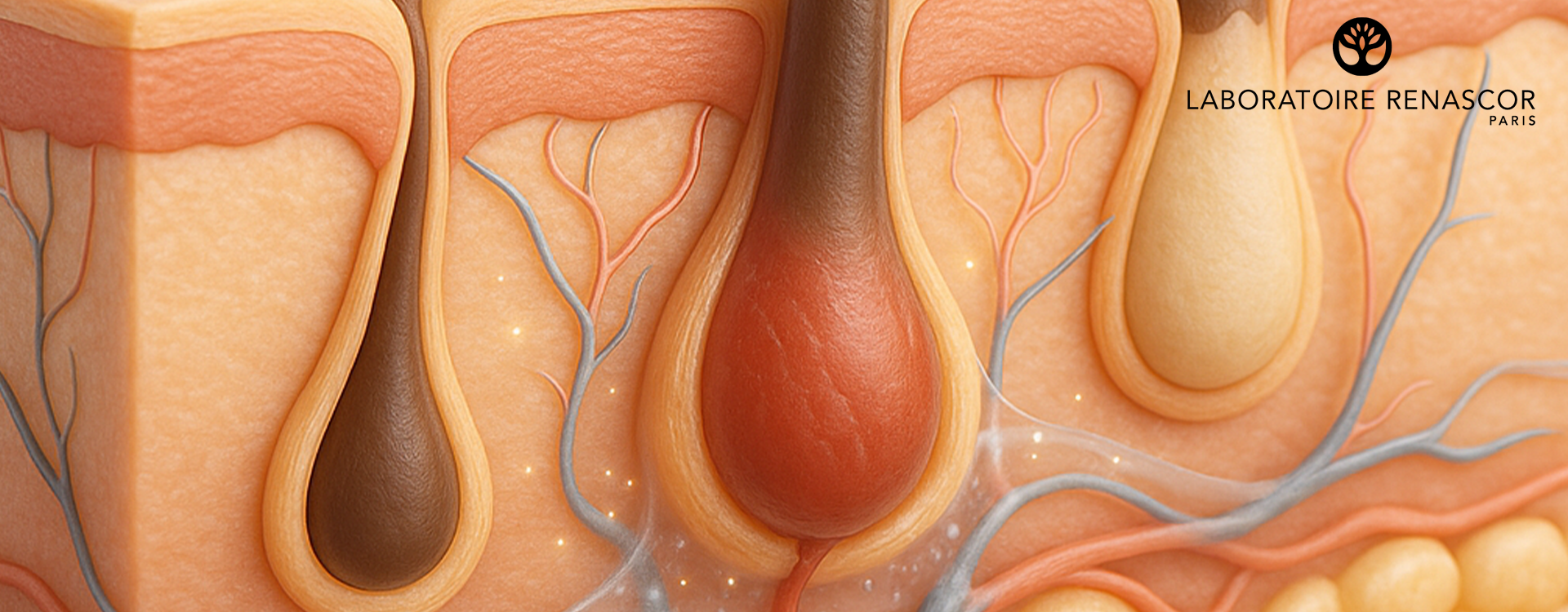
Telogen effluvium occurs when a significant number of hair follicles prematurely enter the telogen phase, the resting phase of the hair cycle.
A few weeks later, they all fall out at once, causing a massive and impressive loss.
1.2 The most common causes
🔹 Biological causes
-
Chemotherapy, heavy treatments
-
Acute illness, prolonged fever
-
Childbirth
-
Surgical intervention
-
Sudden weight loss
-
Deficiencies (iron, zinc, proteins)
🔹 Psycho-emotional causes
-
Chronic stress
-
Burnout
-
Emotional shock (bereavement, separation)
-
Hypercortisolism
🔹 Environmental causes
-
Seasonality
-
Thyroid dysfunction
-
One-time hormonal changes
1.3 How to recognize telogen effluvium?
-
Sudden hair loss ("handfuls of hair")
-
Diffuse loss, without empty zones
-
Hair falling out whole, without miniaturization
-
Fibers maintaining their thickness
-
Appearance of numerous “baby hairs” if the cause is resolved
-
Scalp sometimes more sensitive
1.4 Duration and evolution
Telogen effluvium is reversible.
Regrowth usually starts after 6 to 12 weeks, and density is restored in 3 to 6 months — sometimes longer in cases of chronic effluvium.
2. What is androgenetic alopecia?
The progressive, hormone-dependent, and localized loss
2.1 Definition
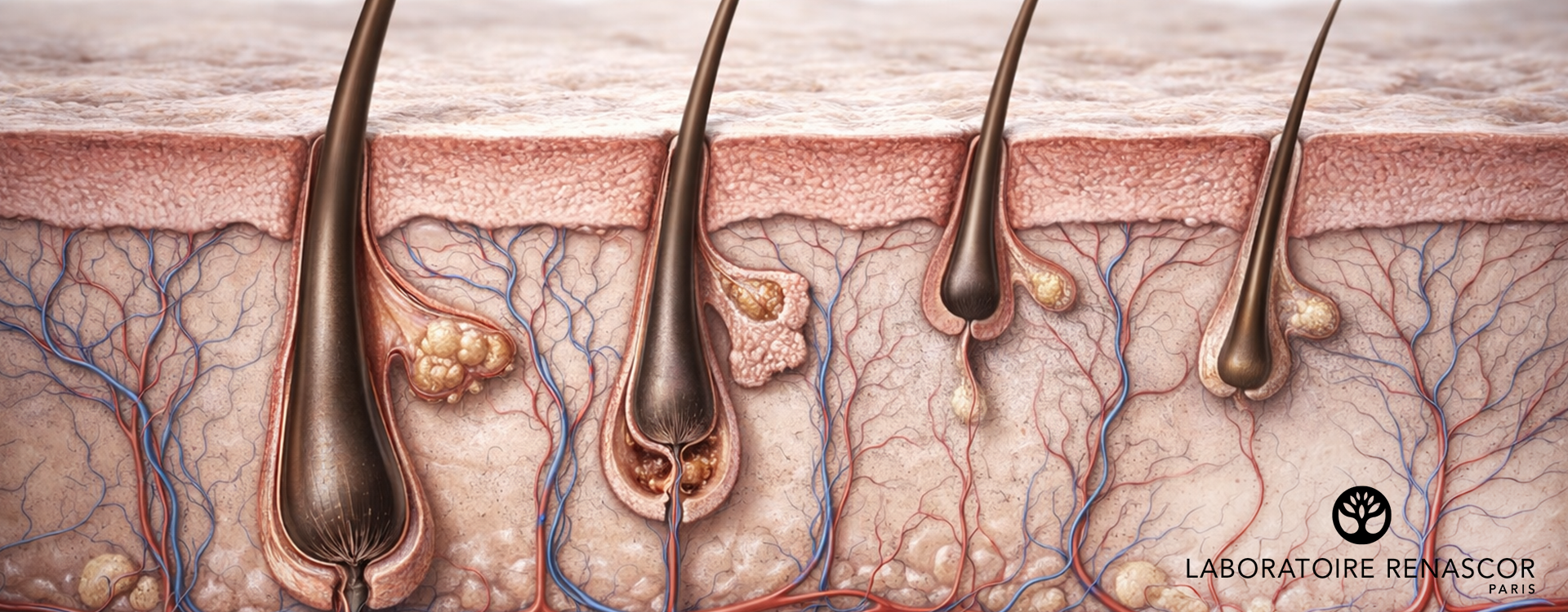
Androgenetic alopecia (men and women) corresponds to an abnormal sensitivity of the follicle to DHT (dihydrotestosterone).
It is not an excess of hormones:
It’s the follicle that reacts too strongly to it.
Result:
-
progressive shortening of anagen cycles,
-
miniaturization,
-
fibers becoming finer,
-
density decreasing over the years.
2.2 Affected areas
In men
-
Temporal recesses
-
Vertex
-
Crown
-
Progression in “M”, then “U”
In women
-
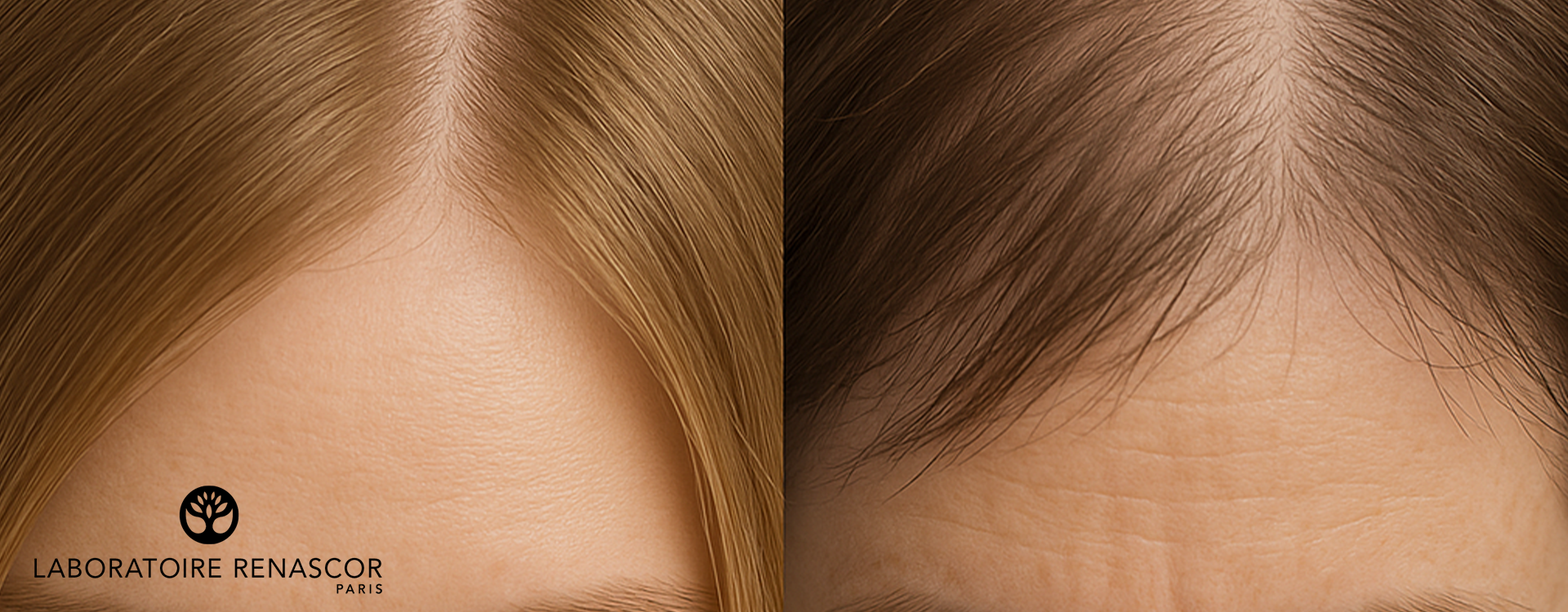
Widening of the central part
-
Weakened density on top
-
Front better preserved
2.3 Typical signs
-
Progressive, slow loss
-
Fibers that miniaturize
-
Hair shorter, thinner
-
Specific areas affected
-
Frequent family history
2.4 Duration and evolution
Without appropriate management, androgenetic alopecia is progressive and permanent.
Follicles miniaturize until exhaustion.
3. Telogen effluvium vs androgenetic alopecia: the comparative table
| Criterion | Telogen effluvium | Androgenetic loss |
|---|---|---|
| Trigger | Stress, shock, deficiencies | Sensitivity to DHT |
| Start | Brutal | Progressive |
| Areas | Diffuse | Predictable |
| Fiber | Normal | Miniaturized |
| Feelings | Massive fall | Density thinning |
| Reversibility | Yes | Never spontaneous |
| Duration | 3–6 months | Continuous evolution |
4. The RENASCOR approach: understand to better rebuild
✔ In telogen effluvium
Objective: reduce inflammation, restart the anagen phase, restore hair synchronization.
-
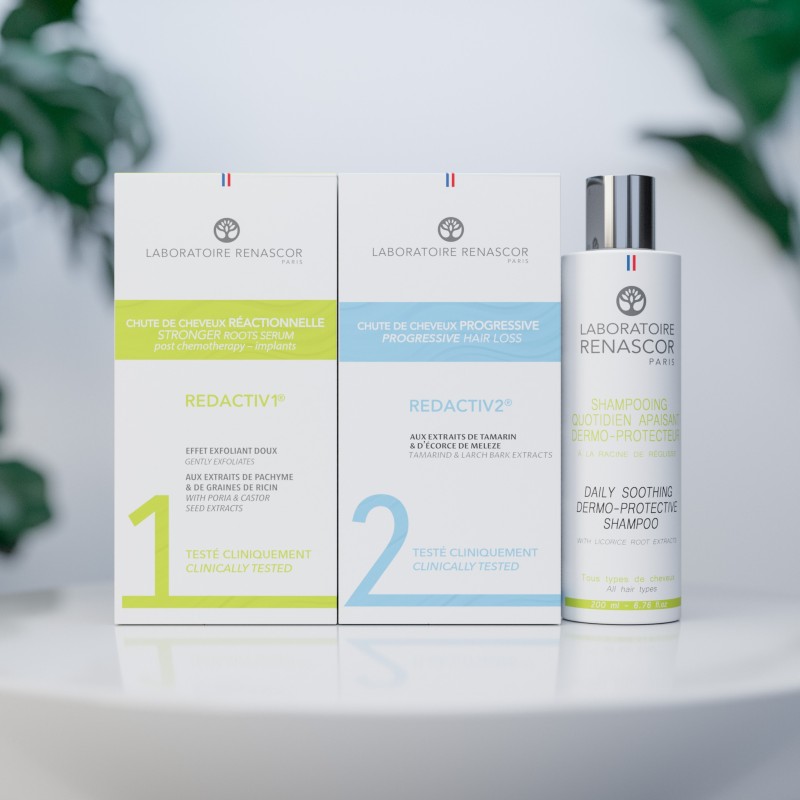
REDACTIV1 treatments (post-chemotherapy)
-
REDACTIV2 treatments
-
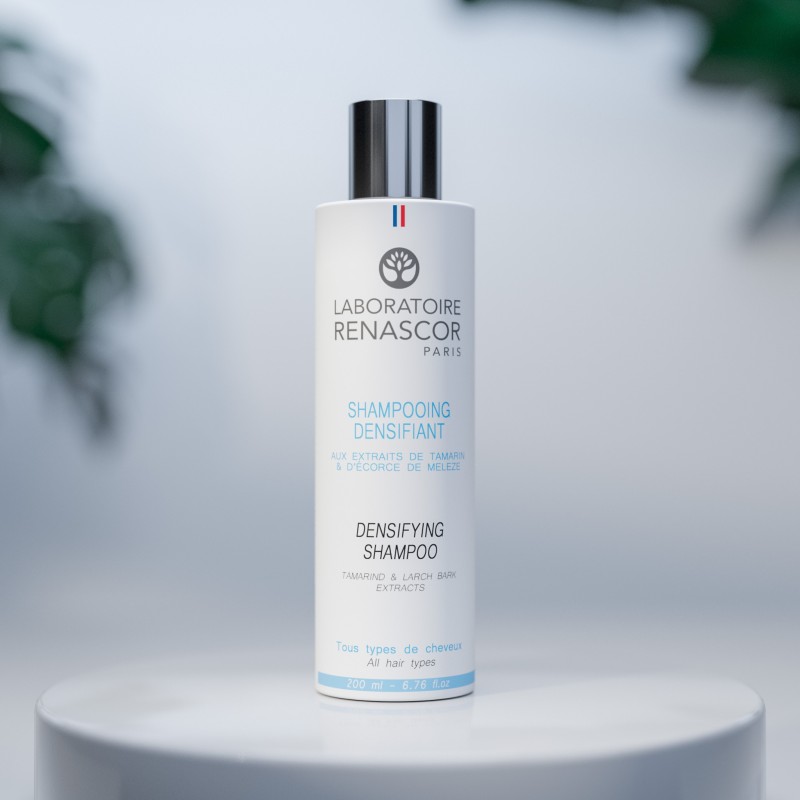
Suitable shampoos (soothing, densifying)
✔ In androgenetic alopecia
Objective: slow miniaturization, optimize vascularization, support regrowth.
-
REDACTIV2
-
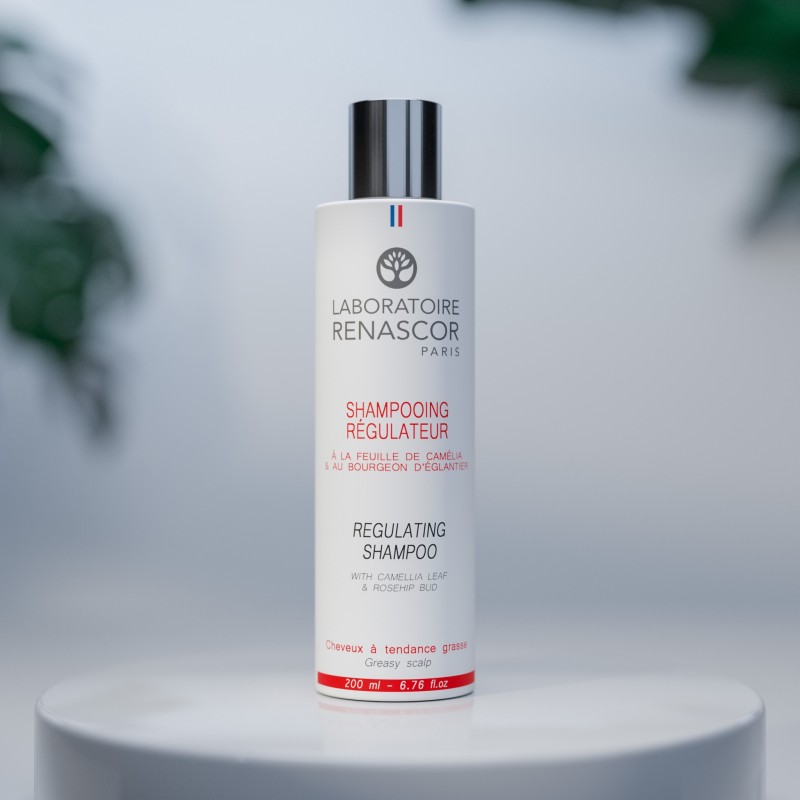
Densifying or regulating shampoo according to scalp quality
Each RENASCOR protocol is based on proven biological mechanisms and a fine understanding of hair cycles.
5. FAQ — Most searched questions
1. How to know if I have androgenetic alopecia or telogen effluvium?
Look at the speed of evolution:
-
if the loss is massive and rapid, it's effluvium;
-
if density thins slowly, it's androgenetic loss.
2. Can telogen effluvium make you bald?
No.
It does not destroy follicles: it puts them in temporary rest.
3. Can telogen effluvium last a year?
Yes, if it becomes chronic (unresolved cause).
4. Why is my part widening?
It's typical of female androgenetic alopecia.
5. Does androgenetic hair loss necessarily start early?
No.
It can start at 18 years old or 55 years old, depending on individual sensitivity.
6. Can you have both at the same time?
Yes: androgenetic loss can be decompensated by telogen effluvium.